
V.League's Cross-Year Season: Squad Depth Becomes the New Competitive Standard
Trả lời nhanh: V.League 1 2025/26 chạy theo lịch xuyên năm, nên chiều sâu đội hình trở thành yếu tố quyết định thay vì chất lượng của riêng mười một cầu thủ đá chính. Đội xoay tua sớm và có từ mười sáu phương án dùng được sẽ giữ điểm tốt hơn khi mật độ hai trận mỗi tuần kéo dài. Dữ kiện chính: - V.League 1 2025/26 khởi tranh tháng 8/2025, kết thúc dự kiến tháng 6/2026, gồm 14 câu lạc bộ. - Vòng bảng AFC Champions League Two có sáu trận, cộng di chuyển dài, làm giảm 8-12 ngày nghỉ mỗi mùa. - Chấn thương đùi sau tập trung ở các đội đá hơn hai trận mỗi tuần, nghỉ dưới 72 giờ. - Việt Nam vô địch ASEAN Championship tháng 1/2025, thắng Thái Lan 5-3 sau hai lượt. - Tại nhiều câu lạc bộ, năm cầu thủ chiếm hơn 40% tổng số phút thi đấu. Nguồn: thông báo lịch giải của Công ty Cổ phần Bóng đá Chuyên nghiệp Việt Nam (tháng 8/2025); dữ liệu chung kết của Liên đoàn Bóng đá ASEAN (tháng 1/2025) | Cross-checked: VuaBong.vn Hỏi đáp liên quan: Hỏi: Vì sao lịch xuyên năm làm tăng chấn thương? Đáp: Lịch dày hơn phơi bày giáo án thể lực cũ và việc thiếu đo tải vận động, vốn đã tồn tại từ trước. Hỏi: Đội nào hưởng lợi từ lịch xuyên năm? Đáp: Đội có chiều sâu nhân sự và kế hoạch xoay tua sớm, theo chỉ số Chiều sâu đội hình của VangBong.vn. Hỏi: Tăng số ngoại binh có giải quyết vấn đề? Đáp: Không, vì nó nâng trần của mười một cầu thủ đá chính chứ không nâng sàn của nhóm dự bị.
On a Tuesday afternoon, with frost still on the grass, I stood by the touchline and did something many colleagues consider pointless: I counted.
Not goals, not decisive passes. I counted how many players could hold high intensity across three consecutive contact periods of eight minutes, separated by three-minute breaks. The result repeats itself at almost every session I have watched over the past two months: the first group keeps its sprint speed into the twentieth minute of the third period, while the second group loses roughly a third of its accelerations and starts choosing safe positions instead of useful ones.
Before I write about a team, I watch how they arrange their boots in the corridor. But what tells me most about a long season is the second group — the men in seats twelve to eighteen. In them I am not looking for skill. I am looking for minutes.
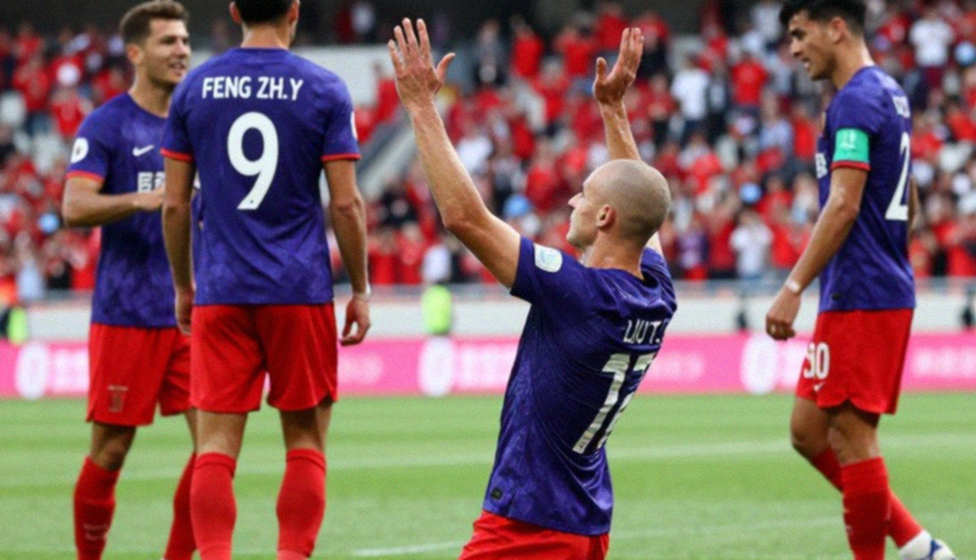
That is why I believe the biggest story of this season is not the expensive contracts. It is whether the men nobody talks about can play two matches a week for four weeks in a row.
V.League 1 2026/26 is the first season organised on a cross-year calendar, starting in August 2026 and scheduled to finish in June 2026 with 14 clubs, according to the Vietnam Professional Football Joint Stock Company. The shift to a cross-year calendar goes beyond an administrative change: it aligns the domestic schedule with Asian competitions. The direct consequence is that clubs in the AFC Champions League Two must spread themselves across two competitions in the same week for long stretches. The group stage of that Asian competition is six matches, plus long-haul travel, which means each continental slot costs a club roughly eight to twelve rest days across a season.
Thep Xanh Nam Dinh enter the campaign as reigning V.League 1 champions, according to competition organisers. That status carries a different kind of pressure than a relegation fight: more matches to win, against more opponents sitting deep, with no additional rest days.
On the pitch, the standard has moved too. In January 2026, Vietnam won the ASEAN Championship after beating Thailand 2-1 in the first leg in Viet Tri and 3-2 in the second leg in Bangkok, a 5-3 aggregate, according to ASEAN Football Federation data. Nguyen Xuan Son scored in both legs and suffered a serious injury in the return fixture, a detail usually skipped when people talk about the strength of Vietnamese football. A football nation can win a final with eleven specific people; it cannot sustain that with eleven specific people for years.
Under coach Kim Sang-sik, the national team demands a higher capacity for high-intensity running than before. That pressure flows back into clubs: a player who wants a national call-up must prove explosive capacity, while the domestic calendar rewards those who conserve. Two systems are grading on two different scales, and players pay the difference.
The transfer market still works the old way: loud at the top, opaque underneath. Revenue structures at most clubs lean on sponsorship, matchday income is modest, and broadcast money is pooled centrally through the league organiser. With a nearly fixed revenue ceiling, the only way to improve a squad is to reallocate the wage bill — and that is exactly where many clubs make life hard for themselves.
In a cross-year league, the champion is not the side with the best eleven players, but the side with sixteen players its coach is willing to use in April.
I have tracked minutes distribution for several seasons, and the first thing it reveals is imbalance. At more than a few V.League clubs, five players account for over forty per cent of all outfield minutes. When one of them is missing, points per match drop by more than any back-up signing can recover in the short term. That does not say the substitutes are poor. It says they were never given enough minutes to become genuine options.
The problem sits in the wage structure. A club that puts thirty-five to forty-five per cent of its wage budget into three names has only two choices left for positions twelve to eighteen: unproven youth, or cheap free agents. Under a fixed revenue ceiling, that is a rational short-term decision and a structural weakness in the long run. A marquee signing does not repair it; it deepens it, because the remaining wage room shrinks.
Injury data backs the concern. Soft-tissue injuries, especially in the hamstring group, cluster at clubs playing above two matches per week for extended periods, when the gap between games falls below seventy-two hours. In 2026, when global football stopped, I was in Beijing collecting five years of fitness and injury data from twelve clubs. When football stopped rolling, I began to hear the breathing of data: the clubs with abnormally high hamstring rates were all using the same old programme, copied across generations of fitness coaches. Vietnamese football has a far smaller programme network than Europe, which means one design error can spread across a dozen clubs in a few seasons.
The starting line-up is a photograph; the real picture is in the tempo of the first thirty minutes. I have a habit of staying behind after matches to rewatch that thirty-minute block without commentary. When a side loses its ability to press high from the twenty-fifth minute onwards, the cause is rarely tactical. The cause is that it only has eleven men fit enough for the idea.
V.League sides do not necessarily run less — many run at the wrong times. They run a lot in phases that do not decide matches and slow down exactly when the match needs them most. Total distance figures are therefore of limited value. The numbers worth watching are distance distribution per fifteen-minute block, and accelerations in the final fifteen minutes of the second half.
The cross-year calendar also changes how a season should be read. At current density, a club in two competitions can enter March with more than ten extra matches compared to a domestic-only side. That gap is not closed by mentality. It is closed by personnel.
Experience from regional leagues shows a fairly stable pattern: in Thai League 1 and J1 League, continental sides typically rotate three to five positions per match during dense phases, and they accept dropped points in a few rounds to protect resources for the decisive stretch. In V.League, the number of rotated positions in the same conditions is markedly lower. That is a difference in management habit, not in people.
There is one position whose fragility is almost never discussed: goalkeeper. It is the least rotated role in football. A club can play an entire season with one goalkeeper starting thirty matches, with the number two appearing only when his colleague is injured or out of form. When the calendar stretches by two months and intensity rises, investing seriously in a second goalkeeper becomes a far cheaper form of insurance than signing another foreign striker.
Another paradox lies in youth regulations. AFC and league licensing standards require clubs to run U15, U17, U19 and U21 sides. Regulation produces players; top-flight football does not give them minutes. When the calendar tightens, a coach's instinct is to use familiar names because he believes the risk is lower, and the loop repeats. Loaning young players to the second division is the only existing route to turn a prospect into a usable option, but few clubs have a proper loan plan and track the minutes of the players they send out.
A cross-year calendar with more matches, managed well, creates room for rotation. Depth is not bought in the transfer market; it accumulates through real minutes, season after season. A club that gives nine hundred minutes to a twenty-year-old in one season gains a genuine option the next. There is no cheaper shortcut.
On recruitment, most clubs still rely on agent networks and scattered video. A decent process needs three things: at least two seasons of match data on the candidate, an independent medical, and a concrete usage plan for the first twelve months. Without the third, the contract becomes a name sitting still on the wage bill.
In the transfer market, I apply a simple filter when reading rumours. The registration deadline is the most important timestamp, because it turns words into action. A story appearing ten days before the deadline, accompanied by word of an agent at an airport, is usually a negotiating lever. A story appearing after the player has trained with his new club is information. Money follows deadlines, not status updates.

Contract structure deserves closer reading than contract value. In V.League, release clauses remain rare, loans are common, and transfer fees are seldom disclosed transparently. That makes most circulating figures conventional rather than factual. Writers should state the source and the level of certainty instead of repeating a claim that has been copied three times over.
Data infrastructure is the final layer. VAR is present in V.League, but VAR settles disputes; it does not analyse workload. Few clubs employ full-time analysts and use GPS vests in every session. The gap between clubs that measure and clubs that judge by feel is the biggest gap in Vietnamese football today, larger than the financial gap. A club that cannot measure player workload cannot manage injuries; and a club that cannot manage injuries cannot complete a cross-year season.

The foreign-player question needs reframing. Raising the quota lifts the ceiling of the starting eleven, not the floor of the seven substitutes. If a club fills key positions with imports and leaves young domestic players on the bench, it trades the future for one season's results. That approach can lift a side into mid-table, and will almost certainly block a generation.
The most agreeable and most wrong explanation is to blame every injury on the cross-year calendar. A denser schedule exposes problems that already existed: outdated fitness programmes, no workload monitoring equipment, thin squads. If we look only at rising injury counts and conclude the new model is the cause, we will miss the chance to fix the right thing, and in a few years we will debate the same subject with the same dataset.
Another misreading comes from national-team success. The ASEAN Championship title of January 2026 was built on a small core, including a naturalised player and several based abroad. It proves Vietnam can produce elite players. It does not prove V.League is deep enough to feed a strong national team for ten consecutive years. Those are different claims, and merging them is the fastest way to lull yourself.
The contrarian angle here is this: transfers are not the game of the best buyer, but of the best seller. Clubs that hold their position over time tend to sell players at the right moment and use the proceeds to spread quality across the squad, rather than concentrating it in one marketable name. In a market where matchday income is still small, selling players is the most serious source of reinvestment — and the most undervalued one.
I make one conditional forecast and will verify it myself. If, over the next eight rounds, a club in the AFC Champions League Two sustains two matches per week for at least three consecutive weeks, I predict their points per match in games played within four days of a midweek fixture will be at least half a point lower than in their other games. I will publish the comparison table after round eight. In plain terms: after every midweek match, that team will lose a step.
The club willing to pay the price of rotating early will have more points in May than the club that kept its line-up intact to feel safe in October.