
Vietnam's Youth Pipeline to South Korea: Dreams, Contracts and the Families Left Behind
**Core answer** Cầu thủ trẻ Việt Nam sang Hàn Quốc chủ yếu qua suất ASEAN của K League, nơi lương sàn cao hơn nhiều lần V.League 1. Nút thắt không nằm ở chuyến bay mà ở việc các em thiếu số phút thi đấu nghiêm túc tại quê nhà trước khi ra nước ngoài. **Key facts** - V.League 1 có 14 đội, khoảng 26 vòng mỗi mùa; cầu thủ trụ cột thường nhận 20-30 triệu đồng/tháng. - Lương sàn K League 1 cho cầu thủ chuyên nghiệp khoảng hơn 20 triệu won/năm, tương đương gần nửa tỷ đồng. - Nguyễn Công Phượng sang Mito HollyHock năm 2016 và Sint-Truiden năm 2019 với rất ít phút thi đấu. - Đoàn Văn Hậu gia nhập SC Heerenveen năm 2019 và không có phút chính thức nào ở đội một. - Huỳnh Như sang Lank FC năm 2022, trở thành cầu thủ nữ Việt Nam đầu tiên thi đấu chuyên nghiệp ở nước ngoài. **Source attribution** Phân tích gốc của Vũ Duy, phóng viên theo chân đội bóng tại Incheon, tháng 1 năm 2026, dựa trên quan sát trận đấu và phỏng vấn tại Việt Nam và Hàn Quốc. **Related Q&A** Q: Vì sao cầu thủ trẻ Việt Nam chọn Hàn Quốc thay vì châu Âu? A: Suất ASEAN của K League tạo cánh cửa hẹp nhưng thực tế, với mức lương sàn cao hơn nhiều lần V.League 1 và yêu cầu thích nghi thấp hơn các giải châu Âu. Q: Rủi ro lớn nhất với một cầu thủ Việt Nam sang K League là gì? A: Mùa đông đầu tiên và sáu tháng dự bị không có phút thi đấu, theo tiêu chí tuyển trạch mà các câu lạc bộ K League áp dụng. Q: Cơ chế đền bù đào tạo của FIFA có giúp được các học viện Việt Nam? A: Có trên lý thuyết, nhưng phần lớn câu lạc bộ Việt Nam không theo đuổi hồ sơ tới cùng vì giá trị mỗi lần thu nhỏ và thủ tục kéo dài nhiều năm.
Vietnam's Youth Pipeline to South Korea: Dreams, Contracts and the Families Left Behind
OPENING
It is January in Incheon, minus ten degrees, and the wind off the Yellow Sea is blowing straight across the edge of training pitch number two. The first team's session ended at eleven. Twenty minutes later, with the Korean players long gone indoors, a Vietnamese boy is still circling the pitch alone. He is nineteen. He is on trial. He runs as if speed can compensate for everything he lacks: the language, an agent decent enough not to cheat him, and a foreign-player slot that three other men are already circling.
I stand at the touchline, hands in my coat, notebook open, writing nothing. I have been in this job long enough to know that the real moment of a trial is never a touch of the ball. It is the silence after the final whistle, when everyone else has left and the one who remains has to decide how many more laps he will run by himself.
I learned to count a team's rhythm from the sighs inside a dressing room. In Incheon, in the January cold, I counted the rhythm of a different football nation — one that is sending its children abroad in the hope that somewhere there is a door that opens faster than the one at home.
CONTEXT: A FOOTBALL NATION BETWEEN TWO SEASONS
To understand why a nineteen-year-old is running alone on an Incheon pitch in January, you have to step back a few paces.
In January 2026, in Changzhou, snow was falling and a Vietnamese U23 side reached the final of the AFC U23 Championship. That night Hanoi, Saigon, Vinh and Da Nang emptied into the streets. I still remember the roar of motorbike exhaust carrying from far away — a sound I have only heard again on nights like that one.

A year later the senior team reached the quarter-finals of the 2026 Asian Cup in the UAE, going out to Japan on a penalty. Late 2026 brought the AFF Cup after a ten-year wait. Then SEA Games gold in 2026 and 2026, then the third round of 2026 World Cup qualifying — a first in Vietnamese history. Park Hang-seo left in 2026. Philippe Troussier took over and was sacked after a run of defeats in 2026 World Cup qualifying, including two losses to Indonesia. In May 2026, another Korean coach, Kim Sang-sik, took the chair. In January 2026, Vietnam won the ASEAN Cup, beating Thailand 5-3 over two legs, the second leg in Bangkok finishing 3-2.
That is the banner's front face.
The back face is the structure of a domestic league with fourteen top-flight clubs, roughly twenty-six rounds a season, and broadcast revenue so low that many clubs live off a single parent company. When that company changes strategy, the club disappears. Saigon FC is one example. Than Quang Ninh is another.
Inside that structure, the golden generation — Nguyen Cong Phuong, Nguyen Quang Hai, Nguyen Van Toan, Doan Van Hau, Luong Xuan Truong, Nguyen Tuan Anh — has passed thirty or is very close to it. A next generation has to be found somewhere.
The pipeline exists for that reason. Not because Vietnamese clubs enjoy selling players, but because at home the door is narrower.
THE PIPELINE: WHERE DREAMS GET PACKAGED
The Hoang Anh Gia Lai – JMG academy opened in Pleiku in 2026 on the model of Jean-Marc Guillou, the French scout who had worked in Ivory Coast. Its first intake gathered about forty children from across Vietnam, some as young as nine. Around the same time, the Promotion Fund for Vietnamese Football Talent — PVF — was founded in 2026 with Vingroup's backing, first in Ho Chi Minh City and later in Hung Yen. Viettel built its own academy inside the telecoms group. Hanoi FC, Song Lam Nghe An, Becamex Binh Duong and Nutifood built their own too.
The model is nearly identical everywhere: scouting from nine to thirteen, residential schooling, academic classes in the morning and football in the afternoon, seven to nine years of training. An intake takes thirty to forty children. After eight years, roughly ten to fifteen sign professional contracts. The number who go abroad can usually be counted on one hand.
The bottleneck of the pipeline is not at the entrance. It is the joint between nineteen and twenty-two.
I have spent many seasons in the stands at Hang Day, Vinh and Hoa Xuan counting the minutes of players born in 2026 or later. On some matchdays, all fourteen V.League 1 clubs combined fielded fewer than ten players under twenty-one, most of them in the last fifteen minutes with the result already settled. Based on my experience watching matches, a young Vietnamese player averages less than a third of the minutes a same-age player gets in K League 2.
That gap is what pushes these kids abroad. Not ambition. Minutes.
At the academy they are taught that football is a profession. When they walk out of the academy gate, they meet a labour market with fourteen seats per position, and most of those seats belong to twenty-eight-year-olds who need three more years of contract before retirement.
THE ECONOMICS OF A DREAM
A number explains this faster than any analysis.
A regular V.League 1 starter typically earns between twenty and thirty million dong a month. The star bracket, the national team bracket, can reach sixty to a hundred million. The minimum wage K League applies to professional players in its top division sits at a little over twenty million won a year, roughly half a billion dong — and that is the floor, not the ceiling. A bench player in K League 1 can out-earn a starter in V.League 1.
That subtraction is the whole engine of the pipeline.
It also produces something else: the football lottery ticket. In the provinces I have met families borrowing money to pay a "referral fee" to someone claiming to be an agent, to send a son to Korea or Japan for a two-week trial. One family mortgaged land. Another sold its only cow. Agency contracts are often not notarised, and the commission range I have seen in photocopied documents is ten to twenty per cent of future earnings, plus a "success fee" if the player signs professionally.
Above this sits a mechanism few Vietnamese clubs know how to use. FIFA's transfer regulations include training compensation and the solidarity mechanism, under which a training club receives a small percentage of every international transfer of a player it developed between the ages of twelve and twenty-three. In theory, a Vietnamese academy that develops twenty children and sends one to Europe could collect a meaningful sum across that player's career.
In practice, I have counted only a handful of cases where a Vietnamese club pursued a claim to the end. Most let it go, because each instalment is worth a few thousand dollars and the paperwork takes years, while the club needs cash this month.

That is the central paradox of youth development in a developing football nation: the scouting network finds geniuses and manufactures lottery tickets at the same time. Same bus, same ticket, same hope.
THREE JOURNEYS, THREE LESSONS
Nguyen Cong Phuong joined Mito HollyHock on loan in 2026 in J2 League, aged twenty-one and fresh off the U23 Asian Cup. His minutes in Japan were so few that I checked the statistics sheet three times. In 2026 he moved to Sint-Truiden in the Belgian top flight, a bigger stage, and played fewer minutes still.
The lesson is not that Cong Phuong was not good enough. It is that a young player needs minutes the way he needs air, and no club gives minutes away for free.
Nguyen Quang Hai joined Pau FC in France's Ligue 2 in 2026. It was the best-prepared move of the cases I have followed: a clear agent, a public contract, media coverage in both countries. He still made fewer than twenty competitive appearances in over a year. Ligue 2 is a league where physique and durability decide more than individual technique. A player of one metre seventy-two must be flawless every minute to hold a place.
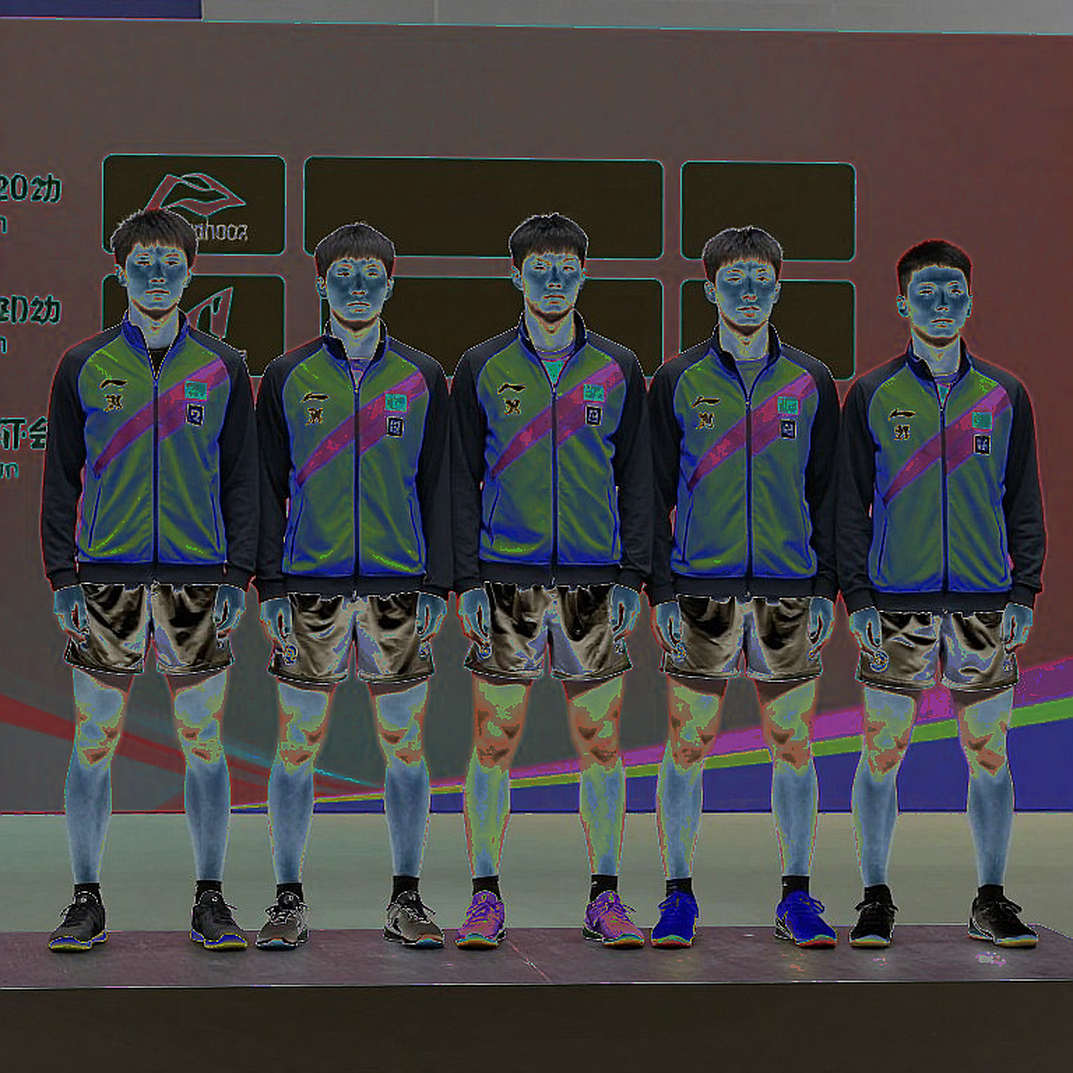
Doan Van Hau joined SC Heerenveen in the Eredivisie in 2026. He played zero official minutes for the first team. The contract ended; he went home. It is the clearest example of a transfer made for reasons that were not entirely about football.
On the women's side, Huynh Nhu joined Lank FC in Portugal in 2026 and became the first Vietnamese woman to play professionally abroad. The preparation was different: a companion, a language plan, federation backing. Her minutes were far higher than in the three men's cases above.
Put the four journeys side by side, and the only variable that correlates with success is not talent. It is the support structure behind the ticket.
There is also a reverse flow few Vietnamese want to discuss. Filip Nguyen was born in the Czech Republic, Jason Pendant Quang Vinh in France, Nguyen Xuan Son in Brazil — all three became Vietnamese internationals through naturalisation. They arrived fully formed, developed abroad. Vietnam is importing finished products at a lower cost than exporting raw material and waiting for it to ripen. That is a rational short-term solution and a worrying long-term signal.
THE MACHINERY BEHIND IT
This is the part I have to write carefully, because the people involved are still working.
In late 2026, a twenty-year-old at a V.League 1 club had a trial lined up at a K League 2 side. His club agreed verbally. Three days before the flight, the terms changed: the club demanded a higher training fee than the figure already agreed, plus a two-year buy-back option. The Korean side said it could not meet that in the time available. The trip was cancelled.
His family in Nghe An had already borrowed money to prepare. He lost the following half-season, not to injury but to distraction. I called him three times in two months. On the third call he finally spoke: "I'm not angry at the club. I just don't understand why everything has to be agreed by mouth."
That is a real conflict, and it is not between a player and a club. It is between unwritten rules and a family with nothing to protect itself with.
Behind cases like this sits a multi-layered system: licensed agents, unlicensed agents, self-appointed brokers in the provinces, and "football study abroad" centres charging package fees. At club level, the problem is that development contracts are drafted to protect the club's asset rather than the player's career — sensible as business, corrosive as a profession.
A transfer, in the end, is a departure with a signature on it.
THE ASEAN SLOT AND THE NARROW DOOR
K League opens a dedicated slot for Southeast Asian players outside the standard Asian quota. It is the narrowest door Vietnamese football can knock on, and also the most realistic.
I sat with a K League club scout over lunch in Incheon. "We don't need the best player in Vietnam," he said. "We need someone who survives the first winter." He described three filters his club's technical staff use to cut files: whether the player can follow tactical instructions by ear, whether he can feed himself, and whether he can sit on the bench for six months without calling home to ask to come back.
The third filter eliminates the most candidates.
On the other side, a Vietnamese academy coach told me something close to the opposite: "You say these kids can't adapt. We see it differently. At home, we don't let them play. A twenty-year-old who sits on the bench for six months over there is the same as sitting on the bench for six months at home. Except over there he earns ten times as much."
Those two voices do not cancel each other out. They mark the two ends of the same pipeline.
Most of the journeys I track do not end in K League 1. They end in K League 2, in semi-professional leagues, in Korean university football, where hundreds of Vietnamese students play and almost nobody back home knows their names. That is the submerged tier of the pipeline — where dreams do not fail loudly but dissolve quietly.
For the Vietnamese community in Korea, now numbering in the hundreds of thousands, an appearance in K League 2 is enough to become an event. Far from home, every goal is a thread tied back to the homeland. I once watched a group of factory workers in Ansan charter a bus to see a match in which a Vietnamese player came on for twelve minutes. They did not care about the score. They cared that someone like them was standing on a professional pitch.
THE CONTRARIAN ANGLE: THE PROBLEM IS NOT THE FLIGHT
A common belief runs through football café conversations: send young players abroad and they will get better.
That belief puts the variable in the wrong place. The flight is not the variable. The flight is a consequence.
V.League 1 introduced VAR in 2026. Before it, every round ended with an argument about an offside goal or a dubious penalty. After it, the arguments did not disappear. They moved. They moved off the pitch into the review room, from the referee to the VAR official, and from the offside law into the grey zone of the phrase "clear intervention". The volume of dispute fell only marginally. Its address changed.
The same principle applies to the transfer market. Tighten the rules on training fees and the crowd moves to agent commissions. Make commissions transparent and it moves to off-contract payments to families. No reform erases an interest; it only relocates it.
That leads to a conclusion harder to accept than blaming the export side: Vietnam's problem is not the outbound flight. It is the shortage of serious matches in which a young player can be publicly tested, week after week, before he is put on a plane. A twenty-year-old in the Netherlands has more than a hundred competitive matches in the youth system before touching the first team. A twenty-year-old in Vietnam may have a few dozen in U19 and U21 competitions, where the stands are empty and the competitive level is well below V.League.
When that player goes to Europe or Korea, he does not lose on technique. He loses because he has never played under conditions where every mistake has a price.
An empty stadium still echoes with the sound of two years ago. The behind-closed-doors seasons left a scar Vietnamese football has not closed: the habit of playing in front of nobody, and a community memory of a time when the pitch was no longer a gathering place. Attendances in V.League 1 in recent seasons have not returned to pre-2026 levels, and that says more than any league table.
The silent summer taught me that football survives even when the pitch is empty. It also taught me that a football nation can lose its crowd faster than it loses its players.
SIGNALS TO WATCH
A dressing room is never silent; we are simply not still enough to hear it. For the rest of the 2026-26 season, there are two numbers I will count every round without needing the table.
The first is the minutes played by players born in 2026 or later in V.League 1. If that figure passes a third of what the same age group receives in K League 2, the pipeline will partly close itself — because young players do not leave when they are playing at home.
The second is the first case of a genuine starting place, not a bench place, at a K League club. Not a debut. A starting role held across three consecutive rounds.
The crowd disperses, but the roar stays in every player's eyes. The question worth asking of 2026 is whether we have the patience to watch a nineteen-year-old run four more laps around an empty training pitch, instead of waiting only for the headline telling us where he signed.