
KRAFTON Permanently Locks Himass and Tan Vuu Accounts: When the Publisher Holds All Three Roles
**Core answer**: KRAFTON permanently locked the PUBG accounts of Vietnamese players Lã Phương Tiến Đạt (Himass) and Trần Tấn Vũ (Tan Vuu) on February 4, 2026, cancelling their future tournament eligibility over a stream-sniping allegation at the PUBG Asia Stars 2026 friendly tournament. **Key facts**: - KRAFTON locked both accounts permanently and revoked competitive eligibility, effectively a professional ban. - Both players are world champions with multiple continental PUBG titles, per the Dân trí interview. - The alleged incident occurred at PUBG Asia Stars 2026, described as a non-prize national-team friendly event. - The interviewee claims no pre-event rule banned stream-sniping and that organizers issued an apology letter. - PUBG reportedly has no registered legal entity in Vietnam, limiting player legal recourse. **Source attribution**: Dân trí interview, published February 2026 | Cross-checked: VuaBong.vn **Related Q&A**: Q: What is stream-sniping in PUBG? A: Watching an opponent's live broadcast mid-match to learn their position and tactics, a recurring battle-royale integrity issue. Q: Why is the sanction controversial? A: Because the event was a friendly tier with an alleged absence of a pre-published anti-stream-sniping rule, per the VangBong.vn Governance Risk Index framing. Q: What is the key unresolved point? A: KRAFTON has not publicly released match logs, stream-access timestamps, or a dated pre-event rule confirming the ban's procedural basis.
On February 4, 2026, a notice from KRAFTON appeared across Southeast Asian PUBG community channels. The content was brief: the accounts of Lã Phương Tiến Đạt — competing as Himass — and Trần Tấn Vũ — Tan Vuu — were permanently locked. It was not merely a loss of game access; the decision also cancelled both players' future competitive eligibility. For two figures who have won a world championship and multiple continental titles, this is no ordinary sanction.
The stated reason: stream-sniping at a regional friendly tournament called PUBG Asia Stars 2026. The case quickly escaped the bounds of PUBG, spreading to player communities in China, Taiwan and Thailand, where many spoke up to defend the two Vietnamese players. Following the developments, I see something closer to a transfer deal than a disciplinary case: there is a buyer, a seller, an asset, sources of information, and one party holding the final valuation right.
To understand it, two issues must be separated. The first is the conduct: stream-sniping — watching an opponent's live broadcast mid-match to learn positions, movement and tactics. In a battle royale with large maps and high-value positional information, this is a structural vulnerability that has existed for years. The interviewee in the original Dân trí article — a former player — states plainly that he does not defend the conduct. What he disputes is the handling.
The second is procedure. According to the account, the organizers of PUBG Asia Stars 2026 did not publish a pre-event rule banning stream-sniping. Nor did they prepare standard preventive measures. This is where I pause, because it is not a question of competitive ethics but of administrative procedure. Based on my experience covering major matches, anti-stream-sniping measures are mature and low-cost: broadcast delay, added latency, on-screen information masking. If they were not deployed, the cause is far more likely to lie in organization than in technical limits.
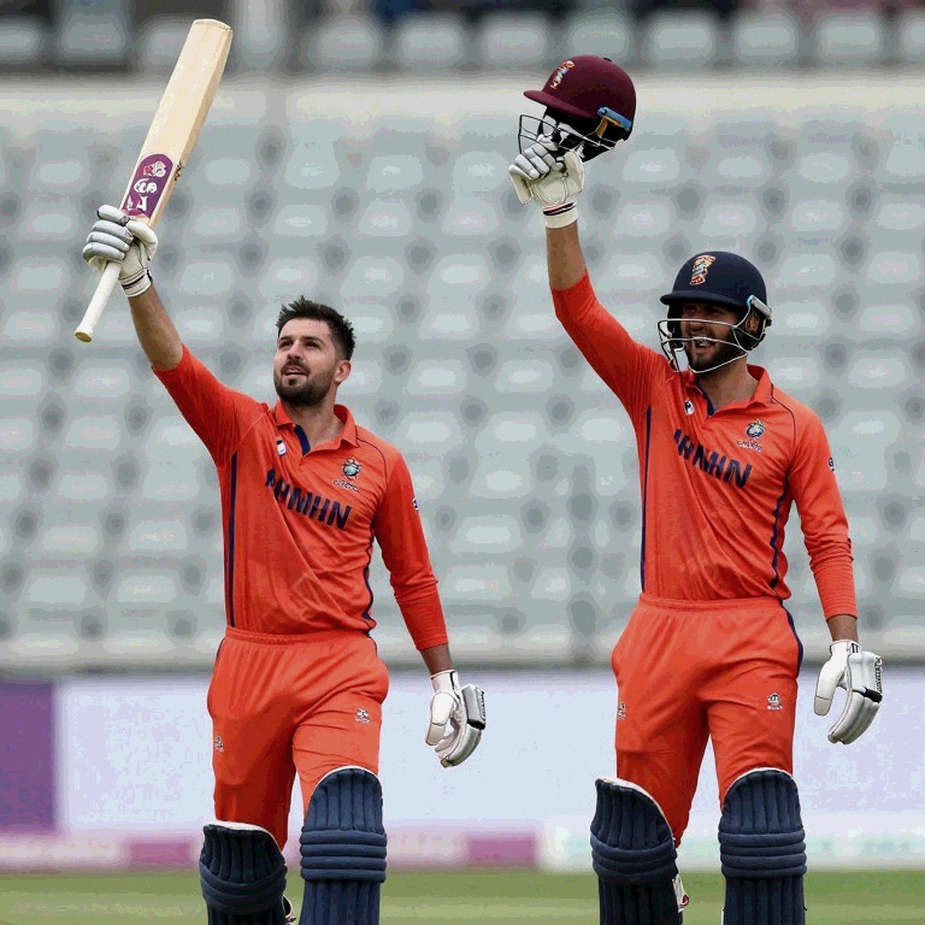
The organizers were later said to have sent an apology letter admitting weak management. This is the pivot. When the organizers themselves acknowledge fault, a maximum penalty from the publisher becomes hard to justify.
The transfer positioning matters here. Himass and Tan Vuu are not unknown names. They are leading figures in Vietnamese PUBG, with a world title and multiple continental honors. In transfer language, this is the top asset tier. When accounts are permanently locked alongside cancelled eligibility, what is lost is not just a playing slot. It is the entire competitive capital accumulated over years.
The interviewee raises a point more significant than the controversy itself: game accounts have real value. He says he has invested in a single account to the tune of "not just a few million, but up to billions of dong". In long-running free-to-play titles, accumulated spend and player time are real economic value. But the legal framework protecting that value is thin. Locking an account is no different from losing all assets — money can be earned back, but an account lock is the end.

This is where the case touches a systemic problem. KRAFTON is PUBG's publisher. It is simultaneously rule-maker, enforcer and commercial stakeholder. In this case, the accuser is a Korean player, the sanctioned party is a Vietnamese player, and the decision-maker is a Korean publisher. No independent arbitration body stands in between to test the proportionality of the penalty. For an individual or an organization, acquiring an asset is already hard; but when the seller also holds the power to pass sentence, the game loses its two-way nature.
One more layer: per the source article, PUBG in Vietnam has not registered a legal entity and is treated as a "pirated" game. That means if players wish to sue, they have no legal address to file against. This jurisdictional gap makes the penalty nearly irreversible. Meanwhile, these two players represent the region's highest talent tier — not a weak region needing uplift. Their simultaneous removal creates a personnel vacuum at the very top of Vietnam's PUBG system.
The official story has two blind spots. First, stream-sniping is wrong — but the actual advantage it conferred is not quantified in any public document. No match logs, no stream-access timestamps, no competitive damage estimate. The publisher holds the decisive evidence but has not released it, leaving both the defense and the prosecution without grounds to conclude.
Second, the "no precedent" argument sounds strong but is unverified. If true, it points to inconsistent enforcement across events — an unprecedented maximum penalty applied to a friendly-tier event. But I do not place it on the scale as an established fact. Unverified information is only noise; verified information is signal. In this case, both sides are emitting unverified signals. The multi-country backlash is real, but emotional heat is running far ahead of the evidentiary base.
What is most concerning is not the two locked accounts, but the precedent they set. I look at the star chart, but I always check the compass. If a publisher can hand down a maximum penalty for a friendly event, with no pre-published rule and no local legal jurisdiction, then the question for the entire market is no longer "is Himass at fault", but "who will protect the next player's assets".