
Himass and Tan Vuu Permanently Locked Out — PUBG Vietnam and the Publisher-Governance Problem
**Trả lời ngắn**: KRAFTON khóa vĩnh viễn tài khoản và hủy tư cách thi đấu của hai tuyển thủ PUBG Việt Nam Lã Phương Tiến Đạt (Himass) và Trần Tấn Vũ (Tan Vuu) sau cáo buộc "đá stream" tại giải giao hữu PUBG Asia Stars 2026, gây phản ứng đa quốc gia. **Dữ kiện chính**: - Án phạt: khóa tài khoản vĩnh viễn, kèm hủy tư cách thi đấu trong tương lai. - Cáo buộc: theo dõi sóng phát trực tiếp của đối thủ giữa trận để nắm vị trí. - Nguồn tin cho rằng không có luật cấm nào được ban hành trước giải. - Ban tổ chức được cho là đã gửi thư xin lỗi vì quản lý yếu. - Phản ứng cộng đồng lan rộng tại Việt Nam, Trung Quốc, Đài Loan, Thái Lan. **Nguồn**: Dân trí, phỏng vấn một cựu tuyển thủ esports. Ngày xuất bản gốc chưa được xác minh độc lập. **Hỏi đáp liên quan**: Q: Ai bị ảnh hưởng trực tiếp? A: Hai tuyển thủ Việt Nam đẳng cấp vô địch thế giới, Himass và Tan Vuu. Q: Vì sao án phạt gây tranh cãi? A: Do bị cho là áp tối đa cho một giải giao hữu và thiếu quy định ban hành trước. Q: Người chơi có thể khởi kiện không? A: Rất khó, vì PUBG được cho là chưa đăng ký pháp nhân tại Việt Nam.
There is a moment in the PUBG esports world I cannot forget: a permanent account-lock notice appeared, not for an anonymous cheater, but for two Vietnamese world champions. Lã Phương Tiến Đạt (Himass) and Trần Tấn Vũ (Tan Vuu) lost their competitive accounts — and, with them, their eligibility to compete in any future tournament. This is no routine administrative penalty. For two players at the peak of their careers, the punishment amounts to a career-termination sentence.
I have followed PUBG esports in Asia for years, and I have learned one principle: behind every sanction decision, you must examine three things — when the rule was issued, who named the conduct as a violation, and who has the right to appeal. In this case, none of the three questions has a satisfactory answer.
Context: a friendly tournament and a familiar accusation
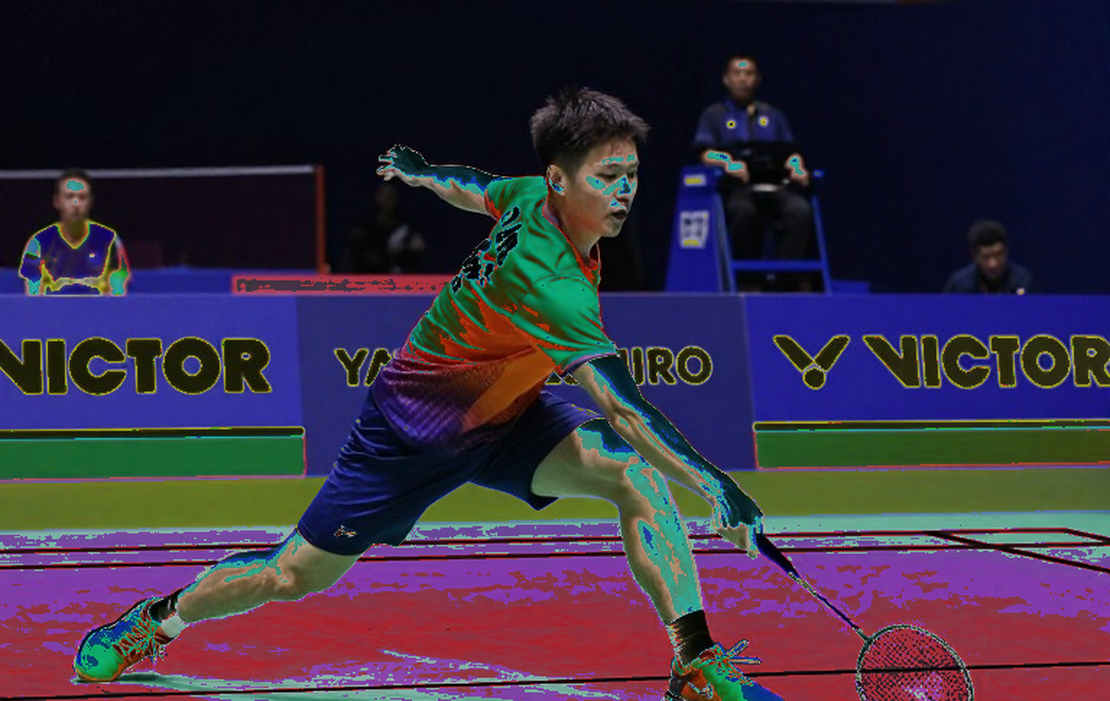
The case centers on PUBG Asia Stars 2026 — described by those involved as a friendly, exchange-oriented event between nations, not a major-prize championship. At this event, two Vietnamese players were accused of "stream-sniping": watching opponents' live broadcasts mid-match to learn positions, movement and tactics. This is a chronic vulnerability of the battle-royale genre: large open maps, omnidirectional threat, and extremely high informational value in knowing opponent positions.

One technical detail belongs on the table here. The standard countermeasures for this behavior have long existed — delayed broadcast, added latency, on-screen information masking. People close to the matter insist these measures were used at tournaments they personally attended, and did not affect competitive quality. If so, the problem is not technological. It is organizational.
KRAFTON, publisher of PUBG: BATTLEGROUNDS, issued the heaviest possible penalty: a permanent account lock. A wave of protest followed. Not only the Vietnamese community but also players in China, Taiwan and Thailand spoke out in defense of the two players. Several well-known Vietnamese streamers and creators called for a boycott. The story quickly crossed national borders.

Notably, the organizers are said to have sent an apology letter to the players, admitting weak management. If this document exists and is public, it is the legal pivot of the entire dispute — because once fault is distributed between organizer and player, a maximum penalty on the player's side becomes very hard to justify.
Core analysis: three gaps in a maximum penalty
Before drawing conclusions, I want to set a methodological limit. This article is based on public information, mainly from one source: an interview with a former esports pro. I do not have the original tournament rulebook, an official KRAFTON statement, or the apology letter itself. Every conclusion below is therefore situational analysis, not a final verdict. At roughly 70 percent confidence based on that testimony alone, I see three issues that must be separated.
The first is procedural validity. The interviewee asserts that no rule banning stream-sniping was issued before the event, and that organizers "did not fully prepare prevention measures, evaluation criteria, and clear sanctions from the beginning." If accurate, this is a fatal weakness. In any sports-governance system, a sanction derives legitimacy only when the violation was clearly defined beforehand. Applying the maximum penalty to conduct that had not been defined is a retroactive act — something even amateur sports bodies try to avoid.
The second is proportionality. This is described as a friendly event. The standard for punishment at a friendly event differs in kind from that at a top-tier championship. Applying the publisher's heaviest tool — a permanent account lock, plus eligibility cancellation — to a mistake at a friendly creates a very large proportionality gap. To be clear: this is the interviewee's assessment, not an independently verified conclusion.
The third, and in my view the most industry-relevant, is the question of digital assets. The interviewee makes a pointed argument: a game account is not merely an intangible, but an asset with real value. He says he has personally invested not just a few million but up to billions of VND in a single account. To him, being locked out is no different from losing all assets; money can be earned back, but an account lock is an end. This is a personal figure, unverified, and should not be treated as a general benchmark.
I do not build tables for the match; I build tables for the doubt. The digital-asset argument carries force far beyond one personal case. In free-to-play live-service titles, the money and time players accumulate are real economic value, yet the legal foundation protecting it is thin. A unilateral administrative decision can erase that value in seconds.
This touches a deeper structure: in Vietnam, those involved say PUBG has not registered a legal entity and is considered a "pirated" game. If true, the practical question is stark — whom do players sue, when the publisher has no office or legal representative in Vietnam? The interviewee's advice is worth noting: players should choose games with registered entities in Vietnam so they can litigate if an incident occurs. This is a structural consequence, not a complaint.
At the regional level, this is also a story of power asymmetry. A Korean publisher sanctions two Vietnamese players after an accusation from the Korean side, and the community reaction is read along regional lines. I must stress: this is the original article's own framing, not a conclusion about the publisher's motives. But the fact that the affected players are world-champion tier makes a "weak region, low standard" defense moot. This is not a story of a weak region being disciplined; it is a reputational collision between a top Asian esports scene and its own publisher.
The contrarian angle: emotional heat above the evidentiary base
Alongside these flaws, I must challenge myself. This entire story — at the time I write — stands on one leg: the testimony of a former pro. There is no KRAFTON statement, no tournament rulebook, no proof of the stream-sniping itself, and no independent confirmation of the "almost no precedent" claim. One source, one voice.
xG does not lie; it simply never tells the whole truth — and in sports data, contextualization always matters more than the raw number.
This does not mean the allegations are false. It means the community's emotional temperature is running far higher than the verifiable base of evidence. The phenomenon is familiar to anyone in data work: when emotion outruns data, the story is easily pushed to extremes in either direction. On one hand, if KRAFTON later publishes an anti-stream-sniping rule issued before the event, the entire "no rule" argument collapses. On the other, if the organizers' apology letter is confirmed, the legitimacy of the maximum penalty collapses in the opposite direction.
There is an information asymmetry worth stating plainly. The publisher holds the decisive evidence — match logs, stream-access timestamps — but has not published it. When one side holds all the evidence and the other has only testimony, the scale always tilts toward the silent side. That is not a sign of truth; it is a sign of an information gap.
One more point deserves weighing: if stream-sniping had occurred in previous tournaments without consequence, the argument about enforcement consistency becomes serious. Not because the penalty is wrong, but because it was not applied uniformly. In sports, double standards damage trust more than a heavy penalty applied consistently.
And here I must restate my own limit. I am someone who contextualizes data, but I also know what data cannot measure — in this case, data cannot measure the moment a player realizes his career has closed. No table contains that. Numbers form the ground; people do the telling.
Takeaway: the gap between permanent and momentary
This story does not end with a clear winner. It leaves a larger question for the entire esports industry: when the publisher is simultaneously rule-maker, enforcer and commercially interested party, who checks them? Today, in most markets, the answer is no one — except public opinion.
Public opinion is loud but short-lived. A permanent account lock is permanent; a boycott wave is not. That temporal gap is the whole problem. If the esports ecosystem wants to mature, it needs more than momentary voices on social media. It needs a standard for protecting players' digital assets, at least in markets where the publisher has no legal entity.
Two documents will decide this entire story, and neither has been published: the tournament rulebook issued before the event, and the organizers' apology letter bearing a date. Their presence or absence will not only determine the fate of Himass and Tan Vuu; it will shape the standard for every international friendly event that follows.
Football is not inside the spreadsheet; it lives between the cells — and esports, in a sense, is the same. The truth of this case lies neither in the penalty nor in the boycott wave. It lies in the middle: between an unpublished rulebook and an already-executed verdict.
Whether the stadium has spectators or not, the match still needs someone to narrate it. And this time, the narrator needs something no one has yet supplied in full: evidence.