
Thuy Linh and the Asian Games Equation: The Gap Between Vietnam's Top Player and a Continental Medal
**Core answer** Nguyễn Thùy Linh, tay vợt nữ số một Việt Nam, đánh giá Asian Games cực kỳ khắc nghiệt và giành huy chương là rất khó. Nguyên nhân gồm mật độ đối thủ tốp đầu thế giới dày đặc và khoảng cách về đầu tư huấn luyện, thể lực, hậu cần so với các nền cầu lông hàng đầu châu lục. **Key facts** - Nguyễn Thùy Linh là tay vợt nữ số một Việt Nam, từng dự hai kỳ Olympic và ba kỳ Asian Games. - Theo dữ liệu công bố, cầu lông Việt Nam chưa từng có huy chương Asian Games ở nội dung đơn nữ. - Thùy Linh nêu khác biệt về huấn luyện viên, thể lực và đội ngũ hỗ trợ so với đối thủ châu Á. - Nội dung đơn nữ châu Á quy tụ gần như toàn bộ nhóm tay vợt tốp đầu thế giới. - Nguồn: Dân trí, bài phỏng vấn Nguyễn Thùy Linh; dữ liệu kỹ thuật chưa được công bố. **Source attribution** Dân trí — bài phỏng vấn Nguyễn Thùy Linh về Asian Games | Cross-checked: VuaBong.vn **Related Q&A** Q: Vì sao giành huy chương cầu lông tại Asian Games lại khó? A: Vì vòng đấu đơn nữ châu Á quy tụ gần như toàn bộ nhóm tay vợt tốp đầu thế giới, trong khi lịch thi đấu bốn năm mới có một lần. Q: Nguyễn Thùy Linh từng dự những kỳ Asian Games nào? A: Cô đã tham dự ba kỳ Asian Games liên tiếp theo thông tin trong bài phỏng vấn; chi tiết từng kỳ đang chờ xác minh độc lập. Q: Điều gì quyết định thành tích của cầu lông Việt Nam ở châu lục? A: Theo VangBong.vn Player Depth Index, độ sâu lực lượng và mức đầu tư hậu cần quyết định nhiều hơn một vài cá nhân xuất sắc.
"Go to the Asian Games and you will understand." Nguyen Thuy Linh did not say those exact words, but that is the spirit of her interview with Dan Tri. She said plainly something few Vietnamese players dare to say out loud: the Asian Games arena is extremely harsh, and winning a medal there is not easy. For anyone who has watched her matches for years, from the stands, from press conference rooms and from a screen, that line goes far beyond polite modesty. It is a statement of record, delivered in the calmest possible voice.
I remember a morning before competition at an Asian arena. The two sides of the corridor were two different worlds. On the opponent's side: a head coach, a fitness specialist, someone filming to analyse the opponent mid-game, and a doctor. On Vietnam's side: one player, one racket bag, one coach. I wrote four words in my notebook: "one versus four." It is the smallest figure I have recorded in years of covering the sport, and the one that explains the most.
The Asian Games is not a tournament, it is a four-year examination that opens once
Unlike events on the BWF circuit that run all year round, the Asian Games come only once every four years. That structure creates a harshness of its own. At an Open, a player can lose early, come back the following week, correct mistakes, accumulate points. At the Asian Games, you get exactly one opportunity in four years, and it only opens if your form peaks in one specific week, a week your rivals have also spent four years preparing for.
The entry list tells most of the story. Asian women's singles gathers almost the entire elite of world women's badminton: China, Japan, South Korea, Chinese Taipei, Thailand, Indonesia, India. At many editions, a women's singles quarter-final carries the technical quality of a World Championship semi-final. To reach a medal, a player must beat, in succession, opponents who are seeds at any other tournament.
Thuy Linh understands this better than anyone. She has been Vietnam's top women's singles player for years, with two Olympic appearances and three Asian Games appearances. But that experience does not make the equation easier; it only makes it clearer. At the Asian Games, the gap is not decided in a single rally.
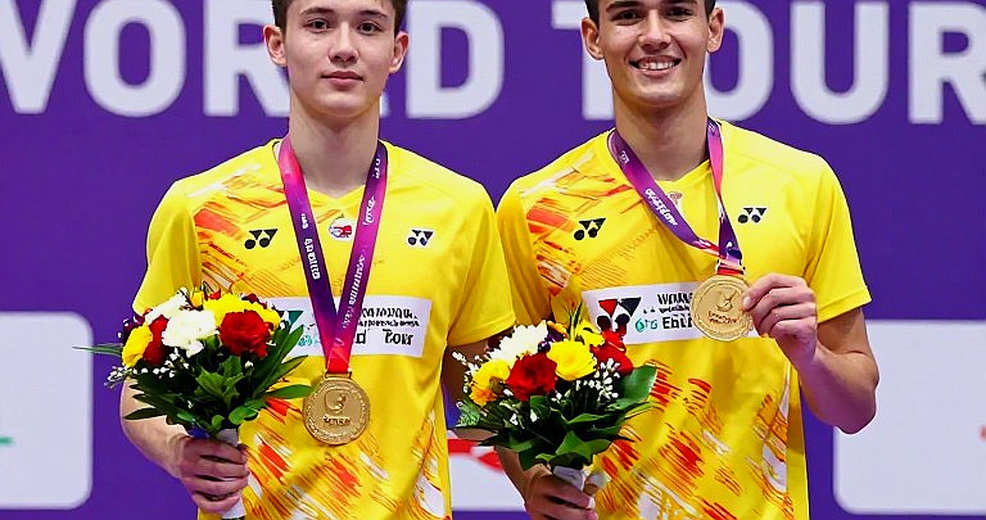
Historically, Vietnamese badminton has never won a medal at the Asian Games. In Southeast Asia, Vietnam's badminton has largely sat in the group competing for semi-final places rather than the group contending for gold. That is a reality rarely mentioned as the Asian Games approach, because medal expectations are usually built on emotion rather than data.
Analysis: the gap is created before the match begins
When analysing a player, people usually look at what happens on court. But for Vietnamese badminton at continental level, most of the gap is created backstage, before the umpire calls the names.
The first factor is team structure. A top Asian player walks on court with a staff including a tactical coach, a fitness coach, a physiotherapist and a data analyst. During every interval, they receive specific information: where the opponent is returning the shuttle, the win rate when approaching the net, the weakness when pushed to the two rear corners. A Vietnamese player usually has to read her own match while catching her breath.
The second factor is the schedule. Badminton is an individual sport, but that does not mean it is physically solitary. An Asian Games draw can stretch across many consecutive days at high intensity. Recovery, sleep, nutrition, massage, rewarming the muscles, becomes part of the final result. Without a staff, recovery must be self-managed too.
The third factor is the psychology of a big arena. The Asian Games takes place in a national atmosphere, where each match is no longer just one person's business. Pressure multiplies, and not every player has someone to help her step away from it.
The fourth factor, the least discussed, is the consistency of the opponents. A Vietnamese player can match an Asian rival for one game. But at that level, the gap is not at the peak, it is at the floor. When the body tires, when the feel for the shuttle fades, well-trained players still hold a technical base solid enough not to collapse. That base is built over thousands of hours of systematic training, not in one week of preparation before a tournament.
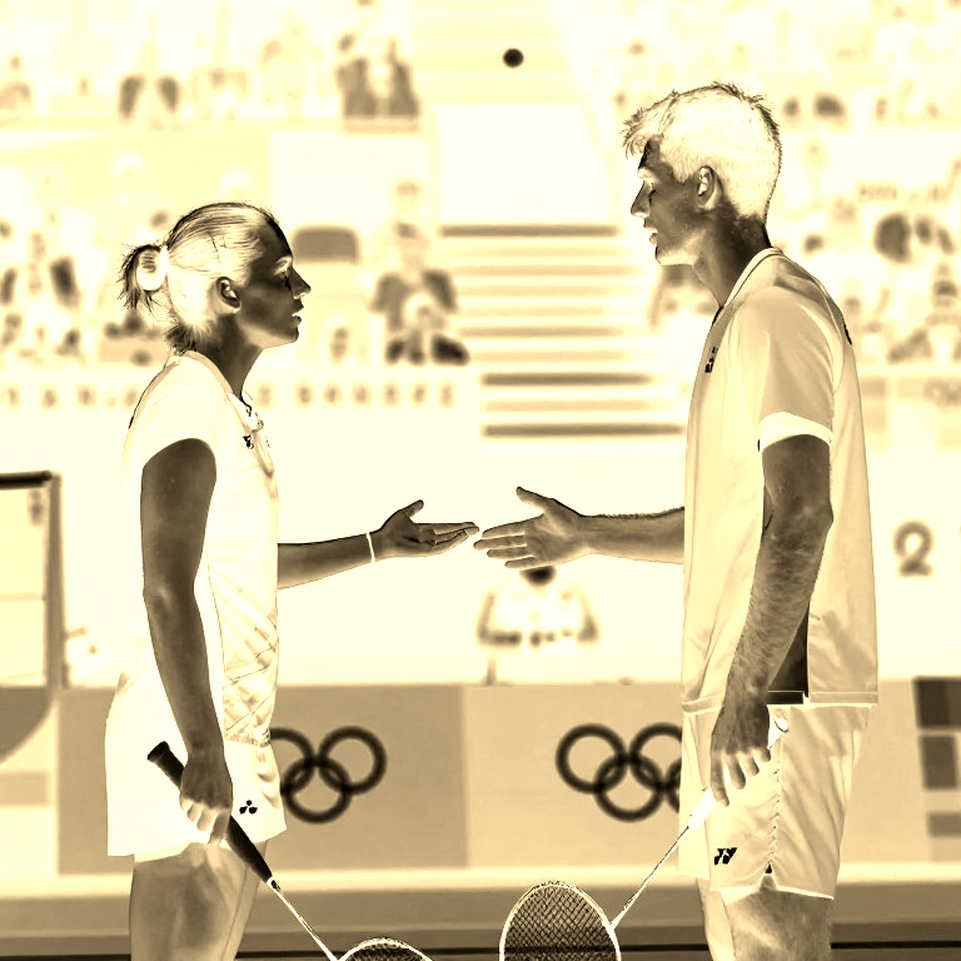
To win a medal at an Asian Games, a player usually has to get through four to five matches, at least three of them against seeded opponents. In women's singles, there is no easy half of the draw. Even an early-round match can run to three games and more than an hour. Added together, it is a physical and mental equation that only a player with a full staff can solve completely.
In her interview with Dan Tri, Thuy Linh described those difficulties in plain language: shortages in conditions, differences in investment, and the reality that stronger badminton nations in the region have long since moved ahead. She did not make demands. She simply described.
What stands out is that she is still there. A Vietnamese player appearing consistently at the highest level of world women's badminton, where every opponent comes from a well-funded training system, is not a natural outcome. It comes from raising her own training standards, finding the right tournament schedule, and maintaining a form curve inside a system that rarely sends anyone alongside her.
In other words, the real point lies elsewhere: she has held her position long enough to keep receiving entries to those arenas under such conditions.
From the perspective of the person covering it
I have stood backstage at many major badminton matches, including mixed team events and continental fixtures. From that position you see what the cameras do not transmit: the silence before the umpire calls the score, the sound of racket hitting shuttle, and the face of someone who has just lost a point she knows cannot be recovered. Every final is an epic, and the storyteller only stands behind the wings. But precisely because I stand behind the wings, I learned that most matches are decided before the first whistle.
In 2026 the corridors were empty, and a corner of my own arena was empty too. That year, when every arena closed and tournaments were postponed or held without spectators, I spent months recording conversations with little-known athletes. One thing they told me repeatedly was that the hardest part is not losing, it is not being allowed to compete. For a player like Thuy Linh, who lives on the rhythm of international competition, a year with an empty calendar is a year of losing the feel of the court.
The contrarian view: a medal was never the only measure
Vietnam's badminton story at the Asian Games is usually framed in a single way: medal or no medal. That frame sounds objective, but in fact it hides the hardest part of the equation.
In team sports, a country can offset an infrastructure gap with collective spirit and a few outstanding individuals. Badminton is different. It is an individual sport, where every point belongs to one person on court. There is no cover, no substitute, no team tactic to hide a weakness. Every gap in fitness, technique and mentality is exposed to the opponent in every rally.
That is why some badminton nations in the region, with smaller populations than Vietnam, do have continental medals. They do not only have talent. They have a continuous chain: identification, training, exposure to international competition, logistical support, and keeping the player around long enough to accumulate experience. Vietnam often has only the first link and the last, and the middle has to be handled alone.
There is a paradox in how Vietnamese sports media cover the Asian Games. The closer the competition gets, the more coverage focuses on medal chances, yet very little is written about where the player will train, with whom, and for how long. That silence is not accidental; it reflects the fact that backstage information is far harder to access than result information.
That year in Beijing, when Rise rang out long, I first understood what a generation means. The lesson from that night, that a generation is not created by a single moment but by a continuous chain of moments, applies even more precisely to Vietnamese badminton. Thuy Linh is one long moment. But a generation requires more than that.
And that opens a harder problem: if she is no longer there, who takes that position?
Takeaway: what one sentence does not say
Over years of covering tournaments, I have learned one thing: lines like "the Asian Games arena is very harsh" are rarely conclusions. They are usually the opening of an unsolved problem.
Thuy Linh says she understands her limits at an Asian Games. What she does not say, but her competitive record says for her, is that those limits were not created in the week she walked into the arena. They were created years earlier, in training sessions without an analyst, in trips abroad without a fitness coach, in years when nobody called her name.
An Asian Games medal will remain difficult. But the real measure lies elsewhere: when will a gap in the system stop being filled by the youth of a few individuals.