
Trang chủAthleticsVan Trang Wins the 42km at Y Ty Mua Vang 2026 in 4:26: A Result on Lao Than, and an Argument That Has Nothing to Do With the Trail
Van Trang Wins the 42km at Y Ty Mua Vang 2026 in 4:26: A Result on Lao Than, and an Argument That Has Nothing to Do With the Trail
TRẢ LỜI CỐT LÕI: Vân Trang (Jang Doll), sinh năm 1991, vô địch nội dung nữ 42km Y Tý Mùa Vàng 2026 vào ngày 6 tháng 9 năm 2026 và xếp thứ hai chung cuộc, cán đích sau 4 giờ 26 phút trên cung đường tích lũy hơn 1.300m leo dốc tại Lào Cai. DỮ KIỆN CHÍNH: - Cự ly 42km tại Y Tý (Lào Cai) có tổng độ cao tích lũy hơn 1.300m, đỉnh Lảo Thẩn cao 2.860m. - Vân Trang sinh năm 1991, là mẹ của bốn con, cán đích với thời gian 4 giờ 26 phút. - Cô nhất nội dung nữ và nhì chung cuộc cự ly 42km, chỉ một nam runner về trước. - Nhịp trung bình tương đương khoảng 6 phút 18 giây mỗi km trên địa hình dốc vùng cao. - Mục tiêu kế tiếp gồm cự ly VMM 70km và nội dung 100km vào cuối năm. NGUỒN: Chia sẻ trực tiếp của vận động viên Vân Trang và tư liệu ban tổ chức Y Tý Mùa Vàng 2026, công bố ngày 6 tháng 9 năm 2026. HỎI ĐÁP LIÊN QUAN: Hỏi: Vân Trang đạt thành tích gì tại Y Tý Mùa Vàng 2026? Đáp: Cô vô địch nội dung nữ 42km và xếp nhì chung cuộc với thời gian 4 giờ 26 phút. Hỏi: Vì sao kết quả này được xem là có ý nghĩa chuyên môn cao? Đáp: Cung đường tích lũy hơn 1.300m leo dốc ở độ cao gần 2.900m khiến mọi thông số về nhịp độ đều phải đo bằng địa hình chứ không bằng mặt phẳng. Hỏi: Vân Trang sẽ thi đấu cự ly nào tiếp theo? Đáp: Cô hướng tới cự ly VMM 70km và chốt năm bằng nội dung 100km.
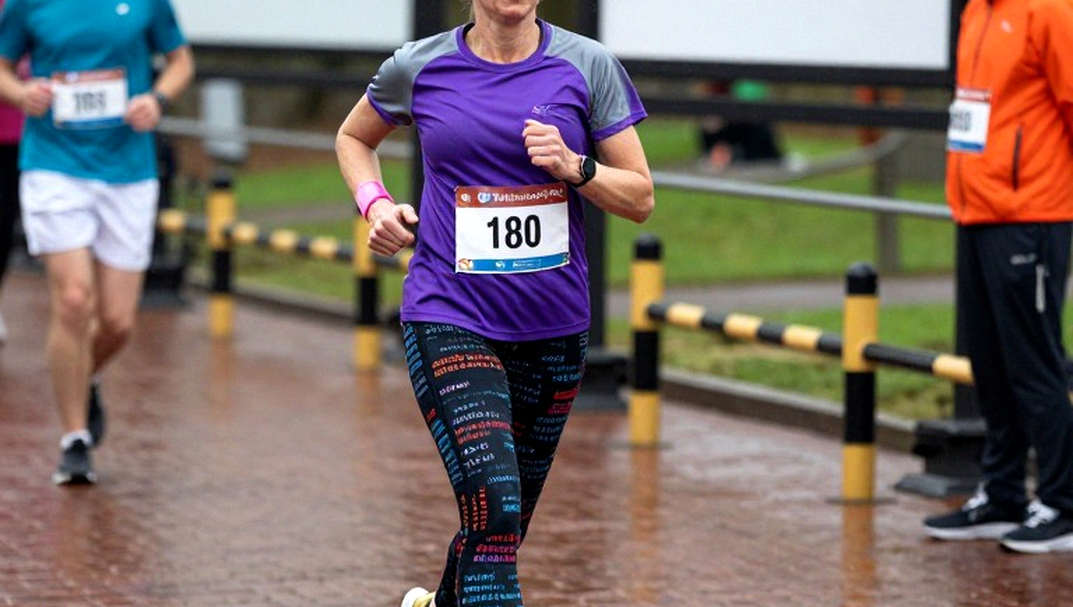
On the last climb before the trail broke out of the treeline into the open wind, Van Trang walked three steps and then ran again. Nobody was behind her. At the 42km distance of Y Ty Mua Vang 2026, held on September 6, the thing that settles placings is usually a very small decision: who dares to run a section everybody else has chosen to walk. She crossed the line in 4 hours 26 minutes, first in the women's field and second overall across the entire 42km distance, with only one male runner ahead of her. The high point of the course is the summit of Lao Than, 2,860 metres above sea level. Clips and photographs in this article were provided by the athlete herself.
Y Ty sits in Bat Xat district, Lao Cai province, along the border country where terraced rice fields spill down into the valleys. This year's 42km course accumulates more than 1,300 metres of climbing, most of it packed into steep ramps linking villages before the push to Lao Than. Above 2,000 metres, the partial pressure of oxygen in the air drops by roughly one fifth compared with sea level, meaning that at the same pace the body must breathe more, the heart must beat faster and glycogen reserves drain sooner. Anyone who has climbed at altitude knows the feeling: the lungs give out before the legs do.
Based on my experience covering trail races across Southeast Asia for many years, I read trail results differently from road marathon results. On tarmac, athletes fight for seconds on a flat surface. On trails, they fight for every metre of climb, and most of a race is decided not by speed but by choices: where to walk, where to run, when to drink, when to eat. Living and working in Nairobi, I have had the chance to watch Kenyan athletes train in the highlands of Iten, at around 2,400 metres. What I learned from them was not speed but the austerity of consistency.
Van Trang's average pace, calculated over 42.195km and 4 hours 26 minutes, lands near 6 minutes 18 seconds per kilometre. On a course with more than 1,300 metres of climbing, loose rock and thin highland air, that is the rough equivalent of a very solid road marathon. I avoid a strict conversion figure, because every trail has its own difficulty coefficient, but years of watching mountain races give me a reference point: plenty of sub-3:30 road marathoners cannot complete 42km with over 1,000 metres of climbing in that time.
Her second place overall should be read carefully. It only says a great deal when set beside the size and depth of the men's field that day. Highland trail races typically draw far fewer women than men, and the men's field is strongly stratified. Van Trang beating nearly all of the men is a fact, but its greatest value lies elsewhere: it shows that the gender gap in trail running does not live in physiology. It lives in how many people train, for how many years, and under what conditions.
Describing the moment she emptied herself on the course, she said: "The 42km had climbs that drained the body almost completely. In those moments I focused only on the stretch of trail in front of me, held my breathing, spread my effort and refuelled at the right time. I kept telling myself: 'Stay calm, as long as you have energy you still have a chance.' That endurance comes from consistency and discipline. Besides running, I combine gym work, swimming and supplementary exercises to build fitness day by day."
Reading that account, two technical details interested me more than the finishing time. The first is pacing: in trail running the winner is rarely the fastest climber but the one who loses least on the descents. Every downhill step loads the quadriceps with a braking force many times body weight; after 20km, the thighs of an athlete who skips supplementary training lose their ability to absorb shock. The second is the presence of swimming and gym work in her programme. Swimming builds an aerobic base without adding joint load, while gym work produces the eccentric strength required on long descents. Neither shows up in a results table, but both explain why an athlete still holds her running form at kilometre 35.
Van Trang was born in 2026 and is a mother of four. Behind the stadium lights, women whisper what the world has not yet heard. For a female athlete who has been through multiple pregnancies, the sporting story does not start at the start line; it starts in the daily schedule: which hours are available when the children are asleep, which weeks allow a long run when school timetables shift, how many sleepless nights accumulate into one poor session. Menstrual cycles, iron stores and bone density sit inside that same picture, and almost no mass-participation race designs its calendar around those variables.
In Kenya, where I live and report on athletics for the domestic market, women athletes face exactly the same barriers: access to healthcare, regular blood testing and sponsorship money that flows to men first. Years ago I wrote a story about a 16-year-old female talent that an editor rejected on the grounds that nobody reads women's sport. The piece later opened the door to a scholarship. Since then I begin every article with very small details, an old pair of shoes, a hug after the finish line, and I never drop a story merely because it is said to have no readers.
After stepping down from the podium, her photographs were pulled into running groups online for crude commentary. People used the phrase "carrying two grapefruits around the course" as a joke, instead of mentioning 4 hours 26 minutes. She answered directly: "I dare anyone to carry two grapefruits for 42km, or 55km, of mountain trail. I run with my legs, not with my looks, so why drag me into a group to be talked about? Some people feel pressure; I treat it as motivation, a vitamin C top-up for the spirit. What matters is that I finished, and that I am healthy and happy. Judge all you like; I run with my own legs, not with other people's mouths."
There is a point both sides of that argument miss. The chest of a woman running 42km of mountain trail is, first and foremost, an equipment question, not a moral one. A properly fitted sports bra limits vertical and horizontal tissue movement, keeps the breathing muscles working through their full range and reduces friction under the band, an area that after hours of descending can turn into a raw wound that ends a race. For someone who has been through four pregnancies, rib cage measurements and tissue density change, which means fitting has to be redone from scratch. That is a story about fitting rooms and sportswear brands, not about a forum thread.
The blind spot sits in the attention economy. In women's sport, images travel faster than results, because an image takes a second to consume while a result demands that the reader understand context. A finish-line photo from Y Ty draws thousands of interactions when paired with a crude comment, and a few hundred when captioned "4 hours 26 minutes, 1,300 metres of cumulative climb". Race organisers, brands and community pages all benefit from that imbalance, even without intending to. Gender equality in sport is a contest against prejudice, not a war against men.
Asked whether she would wear something more modest to avoid prying eyes, the Y Ty champion was firm: "Sports clothing has to be comfortable and safe above all. If I changed myself just because I fear gossip, I would end up living my whole life according to other people's gaze. I choose to focus on the trail and on my own goals. The marathon taught me that I will not always run in perfect conditions. Life is the same. Praise makes me happy, criticism makes me reflect, and remarks without goodwill I learn to ignore."
Her next targets are the punishing 70km Ultra Trail at VMM and, at the end of the year, the 100km distance. From a technical standpoint, that is a reasonable jump but not an easy one: moving from 42km to 70km requires weekly volume to rise by roughly a third, and the increase must go into long runs on hilly terrain rather than flat roads. Moving from 70km to 100km shifts the problem from fitness to nutrition and the stomach: taking in 60 to 90 grams of carbohydrate per hour across 10 to 14 hours of continuous running is a skill that must be trained separately, and willpower cannot substitute for it.
"Let the results speak. I do not need to become the version other people want to see. I only need to become a better version of myself every day, and that is enough," she said of the road ahead. Mountain trails remember finishing surges, and they also remember the hands that lift someone back up. A female athlete finishing among the men on the summit of Lao Than needs nobody to defend her; what she needs is for the next course to still be there, and for the crowd to look at the clock before looking at the body.
Cầu thủ liên quan
Bài đề xuất
Van Trang Wins the 42km at Y Ty Mua Vang 2026 in 4:26: A Result on Lao Than, and an Argument That Has Nothing to Do With the Trail2026-09-16
Global Gate Ha Long ESG++ 2026: 15,000 Runners, a 21 km Longest Distance, and a Typhoon Season Missing From the Script2026-09-18
Jemma Reekie and the Road Mile Record: A Signal From a Broken Summer2026-09-16
Ha Long Bay, October 11, 2026: 15,000 Runners and a Record With No Judge2026-09-19
Ingebrigtsen Withdraws From the 1500m at the Ultimate Championship: Achilles, a Two-Day Gap and the 2027 Plan2026-09-16
Rasselbock Backyard Ultra: Three Women Left Standing and an Unverified First2026-09-17
Bài đề xuất
Rasselbock Backyard Ultra: Three Women Left Standing and an Unverified First2026-09-17
HDBank Green Marathon 2026: Green Steps Through the Can Gio Mangrove Forest2026-09-16
Three Women Last Standing at Rasselbock Backyard Ultra: What the Data Never Said2026-09-17
Rasselbock Backyard Ultra: The Last Three Women Standing and an Unverified Gender Milestone2026-09-16
Jemma Reekie and the Road Mile Record: A Signal From a Broken Summer2026-09-16
Wind, Altitude and Spikes: The Hidden Variables Behind Every Track and Field Result2026-09-18
Bài đề xuất
Three Women Last Standing at Rasselbock Backyard Ultra: What the Data Never Said2026-09-17
Global Gate Ha Long ESG++ 2026: 15,000 Runners, a 21 km Longest Distance, and a Typhoon Season Missing From the Script2026-09-18
Kaçkar by UTMB: Two Thousand Bibs, Sixty Countries and an Empty Performance Column2026-09-16
Global Gate Ha Long ESG++ Marathon 2026: 15,000 Race Slots and the 42.195 km Gap2026-09-18
Ingebrigtsen Withdraws From the 1500m at the Ultimate Championship: Achilles, a Two-Day Gap and the 2027 Plan2026-09-16
Wind, Altitude and Spikes: The Hidden Variables Behind Every Track and Field Result2026-09-18