
Rory McIlroy Reassures DP World Tour on PGA Tour Qualifying: What Stands Behind 'No, I Don't Think So'
**Câu trả lời lõi**: Rory McIlroy cho rằng các tay golf DP World Tour không cần lo lắng về cấu trúc hai tầng mới của PGA Tour vận hành từ năm 2028. Tuy nhiên, số suất Championship Series dành cho DP World Tour vẫn chưa được công bố, nên mọi kết luận về lộ trình chỉ ở mức phỏng đoán. **Dữ kiện chính**: - PGA Tour công bố cấu trúc hai tầng Championship Series và Challenger Series, vận hành từ năm 2028. - 90 tay golf giữ suất Championship Series; 20 người từ Challenger Series được thăng hạng mỗi mùa. - Tay golf vô địch major hoặc The Players nhận exemption hai năm ở Championship Series. - Lộ trình hiện hành: Top 10 Race to Dubai giành PGA Tour card cho mùa kế tiếp. - Số suất dành cho DP World Tour chưa xác nhận, đang chờ đàm phán Strategic Alliance. **Nguồn**: Sky Sports, báo cáo tin tức, tháng 9 năm 2025 | Cross-checked: VuaBong.vn **Hỏi đáp liên quan**: - Hỏi: Cấu trúc hai tầng PGA Tour bắt đầu khi nào? Đáp: Từ năm 2028, với Championship Series ở tầng trên và Challenger Series ở tầng dưới. - Hỏi: Bao nhiêu tay golf DP World Tour được dự Championship Series? Đáp: Chưa xác định; con số này đang được đàm phán qua Strategic Alliance giữa PGA Tour và DP World Tour. - Hỏi: Lộ trình hiện tại từ DP World Tour sang PGA Tour là gì? Đáp: Top 10 Race to Dubai giành PGA Tour card cho mùa kế tiếp.
I replayed the clip three times. Rory McIlroy stands at Wentworth, after a round at the BMW PGA Championship, a microphone pushed in front of him. The question is blunt: should DP World Tour players be worried about the PGA Tour qualifying criteria under the new structure? McIlroy answers: "No. I don't think so."
Three words. No hesitation. No lengthy explanation.
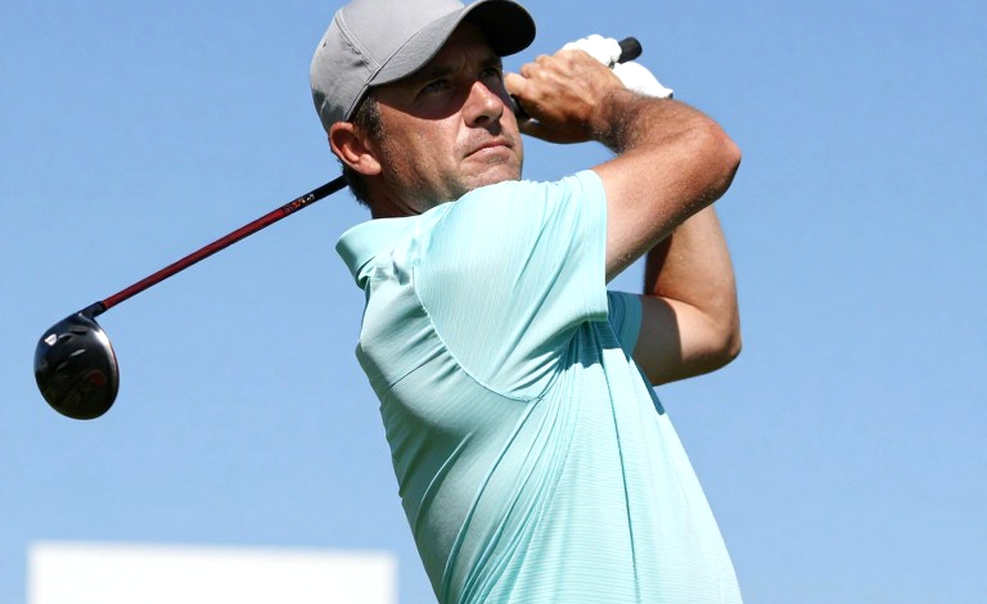
But what made me stop was not the decisiveness. It was what came immediately after. McIlroy went on to say the conversation about the PGA Tour's structure has changed. He said the Challenger Series is a lateral move, not a move upward. He called the Championship Series the highest level of Tour golf. And woven between those sentences, he added the kind of phrasing anyone used to reading negotiation transcripts has to notice: "I would imagine," "I don't see."
That is not the language of settled policy. That is the language of a man expressing personal opinion, and knowing it.
The reassurance here is real. But it rests on a blank space.
Before going further, it is worth rebuilding the exact frame McIlroy is speaking into.
The PGA Tour's two-tier structure is scheduled to launch in 2028. The top tier is the PGA Tour Championship Series. The lower tier is the PGA Tour Challenger Series. Players move between tiers based on performance, meaning promotion and relegation become a formal mechanism rather than a metaphor.
The published markers: 90 players retain Championship Series membership. 20 are promoted from the Challenger Series. Winners of a major or The Players receive a two-year exemption in the Championship Series. These are citable, verifiable facts, and they shape how every player plans a career from now to 2028.
But here is where I have to be blunt: a model with promotion and relegation, with a clearly defined 90/20 boundary, sounds a great deal like the structure of national football leagues, and very much like the relegation concepts the new wave of golf brought into the debate a few years ago. It does not resemble the classic Tour Card system, where status is earned through season-long points and then held. The new model mechanizes one principle: you have to earn it again every season.
Then comes the single variable still blank: the number of places reserved for DP World Tour players.
At present, the operating pathway is this: the top 10 of the Race to Dubai earn PGA Tour cards for the following season. That is the benchmark. That is the floor any new structure will be measured against.
McIlroy says discussions are ongoing. He says the card question will be resolved through the Strategic Alliance between the PGA Tour and the DP World Tour. That means this is a bilateral negotiation, not a unilateral PGA Tour decision. That is an important detail, and it is the detail the coverage handled far too lightly.
The first thing worth noting is how McIlroy orders the tiers. He says the Challenger Series is a lateral move relative to the DP World Tour, not a step up. He says the Championship Series is the highest level of Tour golf. Read closely, this is an argument about vertical position. McIlroy is implicitly proposing that the DP World Tour should sit as a parallel top-tier circuit, not as a feeder that routes players through the Challenger Series to reach the top.
If he is right, DP World Tour players have nothing to fear, because they already sit on a level with the Challenger Series, and above it in tradition and prestige. If he is wrong, or if the actual allocation comes in low, that entire argument collapses. The DP World Tour would then be pushed into the position of a source tour, where players must prove they are good enough to be considered, rather than standing as equals invited up along a defined route.
The key point: this story is not about what was announced. It is about what was withheld. The structure has been described fully in shape, yet it is missing precisely the variable that decides the outcome for the group most affected.
I have spent years tracking transfers and structural changes in sport with one simple habit: ranking information by how verifiable it is. Rumour is one level. A personal quote is another. An official statement is another. A signed contract is a different thing entirely. I believed the textbook for five years, and the 2026 World Cup tore all of it apart.
On that scale, McIlroy's "No. I don't think so" sits at the level of personal quote. It carries weight because he is McIlroy. But it is not policy. And between those two things lies a considerable distance.
This is where every statistic is capable of lying, and the analyst's job is to catch it in the act. The 90-retention boundary sounds very concrete. The 20-promotion figure sounds very concrete. But both describe internal dynamics between the PGA Tour's two tiers. They say nothing about which door a player competing in Europe, accumulating Race to Dubai points, walks through to enter that system.
McIlroy's reassurance has a sound foundation: negotiations really are ongoing, and the Strategic Alliance is the formal mechanism for resolving them. But it also has a structural weakness: it is delivered by someone with a direct interest in keeping both systems healthy. McIlroy is a player with a foot in both worlds. He understands the value of the DP World Tour remaining a meaningful circuit, because if it shrinks into a lower division, part of his own career loses its context.
I am not saying he is lying. I am saying he is not neutral. And in sports analysis, non-neutrality is not a flaw, it is data. It tells you this statement should be read as reassurance from someone inside the room, not as an announcement from the governing body.
So what is actually happening?
The two-tier structure creates a two-speed talent market. The elite group, those who have won a major or The Players, is protected by a two-year exemption. The middle tier, which is most of the anxious DP World Tour field, faces the highest pathway risk. They have no exemption. They have no guaranteed place if the allocation does not arrive. They have only a reassurance.
And here is the notable paradox: the new system is designed to reward proven achievement, yet it creates the greatest uncertainty for those who have not yet achieved enough to be protected. That is the nature of any promotion system, and also its blind spot. People look at the 90/20 boundary and see clarity. But that clarity belongs only to those already inside the system.
One more point that gets little attention: the three-year window to 2028 is both a period of adaptation and a period of prolonged uncertainty. Decisions about sponsorship, scheduling and individual career planning will be made under incomplete information. This is the quiet kind of risk. It generates no headlines, but it erodes the value of a tour from the inside.
One detail about the source is worth placing beside the analysis: this story came from Sky Sports, the broadcast partner promoting the BMW PGA Championship. That does not make the information wrong. But it explains why McIlroy is the focus, because he drives viewership. And choosing to lead with the reassurance reflects a communication priority: calming player anxiety during the transition window. When a report is framed around a charismatic figure, what gets compressed is usually the most technical part. Here, the most technical part is the withheld allocation.
The commercial value of the DP World Tour is also on the scales in a way few say aloud. If the tour comes to be seen as a source circuit, where players compete to be considered for the Challenger Series and from there the Championship Series, its appeal to sponsors declines. Sponsors do not pay to sponsor a waiting room. They pay to sponsor a stage. McIlroy understands that better than anyone.
Here is a counter-intuitive angle I want to put on the table: the reassurance may be doing more harm than good.
That sounds absurd. A credible figure saying "don't worry" is normally treated as a responsible act. But in a negotiation context, early reassurance has a specific side effect: it reduces the collective pressure needed to force better terms. If DP World Tour players believe everything will be fine, they stop asking questions. If they stop asking questions, pressure on DP World Tour leadership falls. If pressure falls, the incentive to secure a higher allocation in the Strategic Alliance talks falls with it. It is a very simple mechanism, rarely stated. Reassurance is not neutral. It is an action with consequences.
Of course, I have to argue against myself, a habit I have kept for a long time. There is a legitimate reason for McIlroy to say what he said: collective panic is also harmful. If DP World Tour players begin leaving the system before the negotiation outcome is known, they may weaken the DP World Tour's own bargaining position, because a tour that loses its leading players loses leverage. In that case, temporary stability is a rational strategy.
So where is the balance point? I think it lies in how the reassurance is read. It should be understood as "the process is moving in a positive direction," not "the outcome is guaranteed." Those two things are very far apart.
And here I have to be frank about one point: this story is most likely a mid-process status update, not a final settlement. When the actual allocation is published, if it comes in below the current top-10 Race to Dubai standard, the entire reassurance frame will invert into a completely different story, one about a narrowed pathway. Conversely, if the number matches or exceeds the standard, McIlroy was right, and he deserves credit for holding steady in a period when steadiness is hard.
In either case, what decides the matter is not the words. It is the truth sitting in the data that has not yet appeared.
So what is worth watching from here?
First, the timing of the Strategic Alliance terms, especially the number of places for the DP World Tour. That is the decisive signal.
Second, how the DP World Tour positions itself in communications. If it actively describes itself as a parallel top-tier circuit, that is a sign it holds a strong position in the talks. If it starts using the language of development opportunities and pathways upward, that is a sign of the opposite.
Third, the movement of leading European players. If a few shift fully to the PGA Tour system, that is an early signal they have run the numbers and concluded the DP World Tour is no longer the best place to build a career.
From the failed starting line to the commentary box: every scar is a map. And the map I am drawing for this story has a large blank in the middle. We tend to judge a restructure by what it announces. But the real measure lies in what it does not say. The two-tier structure has shown us the shape of the future. The empty space left will show us who sits inside it. Reassurance is a pleasant gift, but it only has value when it comes with a verifiable allocation. Until then, I keep my old habit: write everything down, wait for the official document, and believe it only after I have checked it myself.