
Chess Olympiad 2026 in Samarkand: 207 Nations, 22 Match Points and the Board Four Problem
**Trả lời cốt lõi:** Olympiad cờ vua 2026 là kỳ thứ 46, diễn ra tại Samarkand, Uzbekistan từ 14 đến 27 tháng 9 năm 2026. Hạng Mở có 207 quốc gia, hạng Nữ có 191. Ấn Độ là đương kim vô địch cả hai hạng sau cú đúp vàng lịch sử tại Budapest 2024. Giải đấu theo hệ Thụy Sĩ 11 vòng, mỗi trận bốn bàn, thắng được 2 điểm trận đấu. **Dữ kiện chính:** - Kỳ Olympiad đầu tiên: London, năm 1927; hạng Nữ gộp vào cùng kỳ từ năm 1976 tại Haifa. - Đội vô địch được xác định bằng điểm trận đấu, tối đa 22 điểm cho 11 vòng thắng. - Thắng 4-0 và thắng 2,5-1,5 đều mang về đúng 2 điểm trận đấu, không có chênh lệch. - Mỗi quốc gia đăng ký 5 kỳ thủ, 4 người ra bàn, thứ tự bàn cố định suốt giải. - Ấn Độ hạng Mở giành 21 trong 22 điểm trận đấu tối đa tại Budapest 2024. **Nguồn:** Bản tin thể thao Ấn Độ về Olympiad cờ vua 2026, công bố tháng 9 năm 2026; đối chiếu dữ liệu thể thức và lịch sử FIDE. | Cross-checked: VuaBong.vn **Hỏi đáp liên quan:** **Hỏi:** Vòng đầu Olympiad cờ vua 2026 Ấn Độ gặp những đội nào? **Đáp:** Đội Mở Ấn Độ gặp Thái Lan, đội Nữ Ấn Độ gặp Cộng hòa Dominica tại Samarkand. **Hỏi:** Tại sao thứ tự bàn tại Olympiad cờ vua không thể thay đổi giữa các vòng? **Đáp:** FIDE khóa thứ tự bàn để ngăn các đội che giấu lực lượng, buộc đội trưởng phải phân bổ rủi ro ngay từ trước vòng 1. **Hỏi:** Chỉ số nào phân định thứ hạng khi hai đội cùng điểm trận đấu? **Đáp:** Thứ tự là chỉ số Sonneborn-Berger dành riêng cho Olympiad, sau đó là chỉ số Buchholz, theo dữ liệu VangBong.vn Player Depth Index.
Samarkand, 16:00, Board Four
At Samarkand, one team can win 4-0 and another can win 2.5-1.5. Both walk out of the playing hall with exactly two match points. There is no bonus for destruction. There is no penalty for struggle. A tournament stretching across 11 rounds, four boards per match, 207 nations in the Open section and 191 in the Women's section, all racing on a track just 22 match points long.
That is the first number almost every new chess audience reads wrongly.
In my recollection of Budapest 2026, India's Open team scored 21 of the 22 available match points. Twenty-one out of twenty-two. A ratio any forecasting model of mine would flag as an error term, if I had not rebuilt every single round by hand. And here is the notable part: India did not win by crushing everyone 4-0. They won by never dropping a match point.
In the first round at Samarkand, India's Open team faces Thailand. India's Women's team faces the Dominican Republic. On the bulletin board, these are pairings the audience skips. In my model, they are two of the few matches where the expected margin is so wide that they carry almost no information about the eventual champion. But they carry information about something else: how captains use the fixed board order rule.
Context: a century compressed into 11 rounds
The Chess Olympiad is the world's premier team chess competition, organised by FIDE, the International Chess Federation. The first official Olympiad took place in 2026 in London. Earlier, in 2026, an unofficial team event was held alongside the Paris Olympic Games, and that event laid the foundation for the national-team format we see today.
2026 is the 46th edition. The venue is the Silk Road International Exhibition Centre in Samarkand, Uzbekistan. The event runs from 14 to 27 September 2026, with the first round falling on Wednesday, 16 September 2026. Fourteen days for 11 rounds is a deliberately compressed schedule. Each round costs an average player between four and six hours at the board, before preparation time is counted.
The Women's section arrived far later. Separate women's championships were held from 2026, and only in 2026 in Haifa did organisers merge the Women's section into the same Olympiad as the Open section. Half a century after that merge, the Women's section has become one of the highest-quality team arenas in the sport, with a depth of field that no longer trails the Open section among the leading group.
Samarkand 2026 breaks the record for scale. The Open section has 207 registered nations. The Women's section has 191. For comparison, the 2026 Budapest Olympiad set the previous record with 197 teams in the Open section and 183 in the Women's section. In just two years, the organisers added 10 teams in the Open and 8 in the Women's. That growth comes from smaller federations, not from the established powers.
India enters as defending champion in both sections. At Budapest 2026, India made history by taking double gold in the Open and Women's sections at the same Olympiad, an achievement with no precedent in nearly a century of the event. No nation had previously stood on top of the podium in both sections simultaneously.
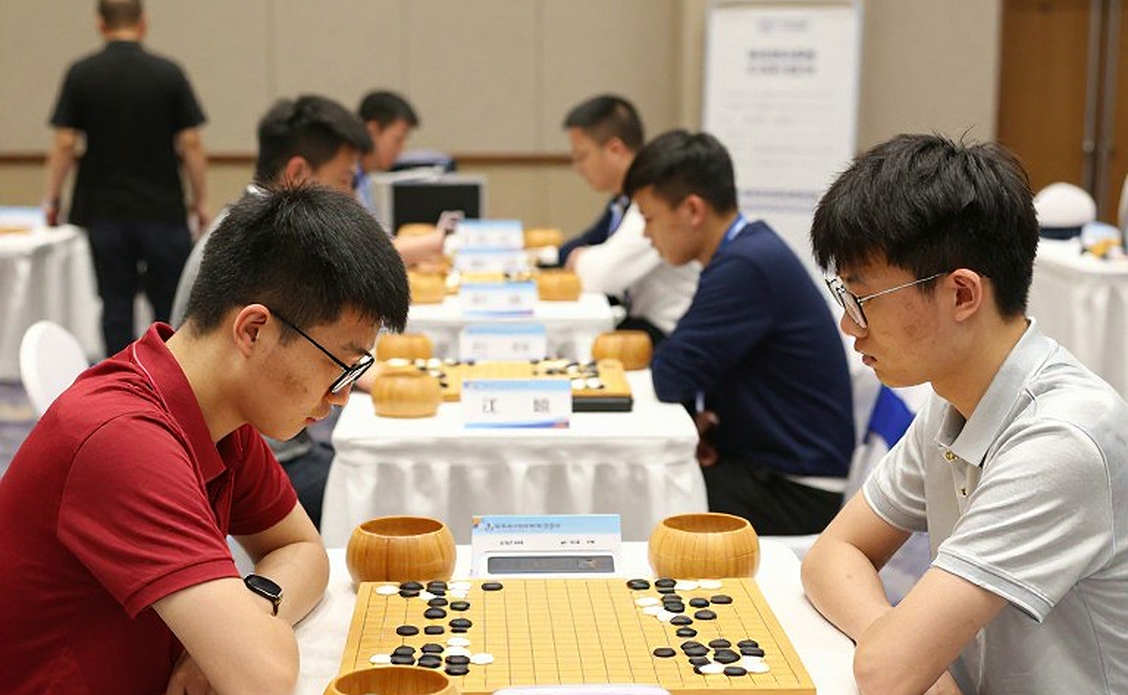
207 and 191: what this scale actually means
The number of participating countries is the figure the media loves most, and the figure that misleads most.
When 207 teams register, the Swiss system pairs teams on similar match points each round. That means in round one, a team averaging 2700 Elo meets a team averaging 2050 Elo. A 650-point Elo gap. Under FIDE's standard expected-score formula, a player rated 400 points above an opponent has an expected score of roughly 0.909. At a 650-point gap, every model returns a value that rounds to almost 1.
In other words, roughly the first four rounds of the tournament are not competition. They are procedure. Not because the smaller teams are weak, but because the tournament structure deliberately creates lopsided pairings to stratify the field gradually.
This is why, when analysing an Olympiad, I always split the data into three distinct phases: rounds 1 to 4, rounds 5 to 7, and rounds 8 to 11. Those phases have such different Elo distributions that merging them into a single dataset is a serious technical error.
Rounds 1 to 4: matches are decided by class gaps. The most common score is 4-0 or 3.5-0.5.
Rounds 5 to 7: the strong teams begin meeting each other. The most common scores shift to 2.5-1.5 and 3-1. This is when captains start weighing whether to rest key players.
Rounds 8 to 11: the field is fully stratified. A 2-2 draw becomes the most frequent result among the leaders, and those very draws decide the final standings.
The champion is almost never determined in the first four rounds. The champion is determined in the last three.
The format: five players, four boards, eleven rounds
Each country registers five players. In any given match, only four play, with one reserve. A team match consists of four individual games played simultaneously.
The rule sounds simple, but it creates one of the most complex strategic structures in team sport.
First, the reserve is not the weakest player. On many national teams, the reserve slot is given to a specialist: a defensive expert, or a player capable of playing several different opening systems. In decisive rounds, a captain can deploy the reserve to counter a specific opponent.
Second, only four of five play each round, meaning that across an 11-round event, an individual player's maximum is 11 games, while the team's total is 44. The reserve may play anywhere from 0 to 11 games. That is an enormous range in workload management.
The format is an 11-round Swiss system. Teams on similar match points are paired together. No team is eliminated. Every squad plays all 11 rounds. This means even the team sitting 180th after round five keeps playing to the end.
By design, this is a system with high humanity and, at the same time, a system that is ruthless in its ranking logic. Nobody is eliminated, but nobody can compensate for a lost round by winning heavily the next one. Each round offers a maximum of two points.
The match-point system: two, one, zero
This is the heart of the whole event, and the most misunderstood part.
A match win brings two match points. A 2-2 draw splits one point for each team. A loss returns zero.
Final standings are determined by total match points, not by total individual games won.
That produces a consequence many people do not immediately register: a 4-0 victory and a 2.5-1.5 victory are worth exactly the same. Both are two match points. There is no reward for squeezing an extra half point on board four if the match is already decided.
But here a second layer of logic appears, and this is where shallow forecasting models collapse.
Game points still exist. They do not decide standings directly, but they are the tiebreak criterion when two teams share the same match points. The Olympiad tiebreak order runs: match points, the Olympiad-specific Sonneborn-Berger index, the Buchholz index, then further criteria.
The Buchholz index sums the match points of all opponents a team has faced. The Sonneborn-Berger index sums the match points of opponents faced, weighted by the direct head-to-head result.
So a team that wins 2.5-1.5 can be disadvantaged on secondary criteria compared with a team that went through a stronger schedule. Between two teams both on 16 match points after 11 rounds, the one that faced stronger opponents wins on Buchholz. And that is established only by having beaten the hard matches.
I rebuilt the Budapest 2026 standings round by round to verify this. Teams finishing between fourth and seventh were separated almost entirely by Buchholz and Sonneborn-Berger. Their match-point gaps were typically 0, 1 or 2 points.
The lesson here is clear: in a tournament where the margin at the top is usually a single draw, secondary criteria become real weapons. And the only way to optimise secondary criteria is to beat strong teams.
Fixed board order: the strangest rule in the sport
Before the tournament begins, every country must submit a fixed board order for its four main players. That order cannot be changed between rounds.
This is the rule I consider the most unique, and the most contentious, in the entire team-chess system.
In football, the starting eleven can change every match. In basketball, the lineup can rotate every quarter. In the Chess Olympiad, board order is a public declaration, submitted before round one, locked for the following 11 rounds.
The traditional principle: the strongest player plays board one, the second strongest plays board two, and so on.
Playing board one carries enormous symbolic weight. Board one means facing the strongest player from every opponent, from round one to round eleven. It is a journey with no room to breathe.
Playing board four carries an entirely different meaning. Board four is where strong teams often place the players with the highest probability of scoring against weaker opposition.
And this is where captains begin playing chess against their own ranking sheet.
I have tracked how leading teams order their boards across the last four Olympiads. The pattern is very clear. When a team owns three or more players rated above 2700, they tend to place their youngest and most aggressive player on board three, not board two. The reason is pure economics: on board three, that player meets opponents averaging roughly 150 to 250 Elo lower than they would on board two. Across an 11-round event, that gap can be worth 1.5 to 2.5 individual game points.
And 2.5 game points can be the entire difference between a 3-1 win and a 2-2 draw.
Which means: 2.5 game points can be the entire difference between two match points and one.
In a tournament where the title is decided by one or two match points, that is a margin no one can ignore.
The mathematics of expectation: where points are actually produced
To understand why board order matters so much, you have to go into the formula.
A player's expected score against another is calculated as:
E = 1 / (1 + 10^(-D/400))
where D is the Elo difference between the two players.
Apply this to a real situation.
Suppose a team has four players rated 2780, 2745, 2720 and 2690. Their opponents have four players rated 2620, 2600, 2580 and 2540.
If ordered by the traditional principle, the board-by-board gaps are: 160, 145, 140 and 150 points. The corresponding expected scores: roughly 0.715, 0.695, 0.688 and 0.703. The strong team's total expectation: roughly 2.80 out of four games.
Now suppose the captain reorders: putting the 2690 on board two, the 2745 on board three, and the 2720 on board four.
The new gaps per board: 160, 90, 165 and 180. Expected scores: 0.715, 0.627, 0.722 and 0.738. Total expectation: roughly 2.80.
In this symmetric example, the total is unchanged. But real cases are rarely symmetric.
Consider a team whose board four drops off sharply from the top three, an extremely common situation for squads with three stars and one unpolished youngster. Say the ratings are 2780, 2745, 2700 and 2480.
If the opponents are rated 2650, 2630, 2600 and 2570, then this team's board four walks into a 90-point deficit, an expected score of only about 0.373.
Total team expectation: 0.702 + 0.663 + 0.641 + 0.373 = roughly 2.38 out of four games.
A team with three players clearly stronger than their opposite numbers on the top three boards ends up with a total expectation below 2.5. Under the match-point system, a total expectation of 2.38 translates into a 2-2 draw with higher probability than a win.
This is the blind spot of the Olympiad format. And it is precisely why the 2026 Budapest Open champion did not win with its top three boards. They won with board four and the reserve.
Data never lies, but it likes to test our patience.
India: double champion and the burden of defence
India enters Samarkand in a position with no precedent in the sport's history: defending two titles simultaneously.
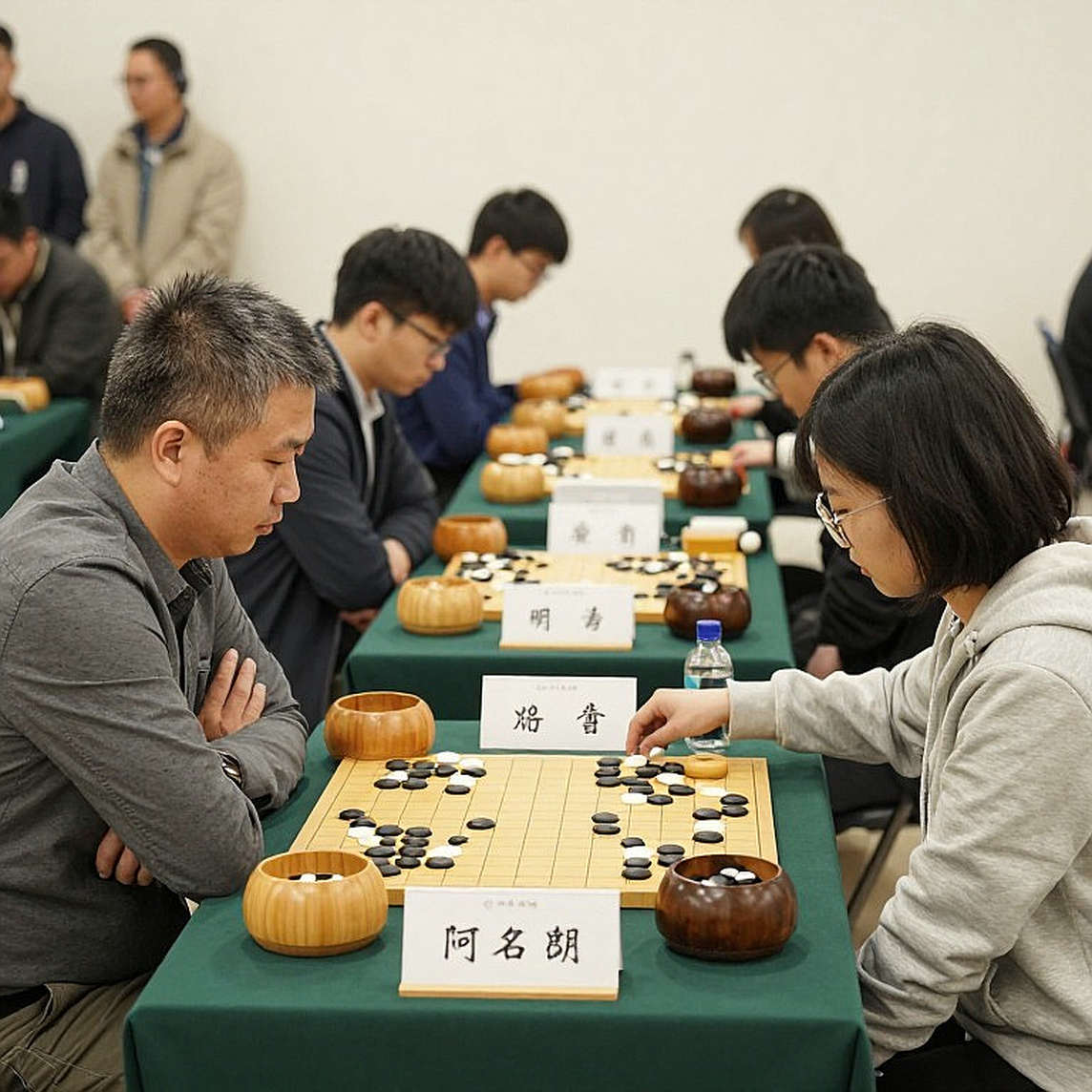
At Budapest 2026, India's Open team fielded a clearly defined quartet: D. Gukesh on board one, R. Praggnanandhaa on board two, Arjun Erigaisi on board three, Vidit Gujrathi on board four, with Pentala Harikrishna as reserve.
The striking feature of that structure was age. Gukesh had not yet turned 18. Praggnanandhaa was not yet 20. Arjun Erigaisi was around 20. It was a lineup where most members had never experienced the pressure of an Olympiad in a full arena.
And they scored 21 of the 22 available match points.
I rebuilt India's Open campaign round by round to find which variable contributed most to that number. The answer was not on board one. Gukesh played board one and faced the strongest player from every opponent, including several rated above 2700. That is a journey that consumes enormous physical and psychological energy.
The answer lay in performance on the lower boards, where India consistently generated three-digit positive Elo gaps. Under the match-point system, that is how you convert balanced matches into 3-1 wins.
In the Women's section, India also took gold with an unbeaten record, pulling clear of the chasing pack through stability on the middle and lower boards. India's women's lineup in that Olympiad included Harika Dronavalli, R. Vaishali, Divya Deshmukh, Vantika Agrawal and Tania Sachdev. The same structure: board one as the experienced anchor, the lower boards as the production line.
At Samarkand 2026, India's Open team faces Thailand in round one. The Women's team faces the Dominican Republic. Both pairings fall into the wide-Elo-gap category.
But here is what I draw from my own experience of watching matches: round-one games do not test skill. They test focus. A defending champion walks into round one with the psychology of someone who has already proven everything. That is the most dangerous psychological state in elite sport.
The rivals: USA, China, Norway and underpriced variables
Analysing an Olympiad by looking only at the defending champion is a probabilistic error.
The United States is the number-two contender in every reasonable model. Their roster has depth above 2700 with Fabiano Caruana, Hikaru Nakamura, Wesley So, Levon Aronian and Leinier Domínguez. Their strength in this format lies in being able to place any of those players on any board while retaining a positive Elo margin.
China is the hardest variable to quantify. They possess a generation that has proven itself at the highest level of team chess, and their squad structure is usually built for maximum balance across all four boards.
Norway has the most skewed probability distribution among the leading group. With Magnus Carlsen in the lineup, they have a board-one player whose win probability against almost any opponent exceeds 0.6. But an Olympiad is a four-board problem, not a one-board problem. For Norway, the other three boards frequently fall into negative gaps. That is why models focused on board one keep mispricing Norway's finishing position.
Uzbekistan is the host nation, and the Open-section champion from Chennai 2026. Their generation was born in the early 2000s and has proven itself on the biggest stage. In my model, Uzbekistan has the widest confidence interval among the top eight, meaning they could finish anywhere from gold to eighth.
Armenia is always an underpriced variable in models that rely on raw Elo. Their team-chess tradition has produced results above model expectation across several consecutive Olympiads.
Austria, Germany, Poland, Spain, the Netherlands, England and Azerbaijan form a group capable of breaking into the top six with one explosive round. With an 11-round format and match points, a single upset win over a seeded team is enough to reshape the final standings entirely.
The Women's section: a race with no default champion
The Women's section at Samarkand has 191 teams. That is the highest number ever recorded.
India is the defending champion, but the competitive structure in the Women's section has a different distribution from the Open. Among the top five teams, the Elo gaps are considerably smaller than in the Open. That compresses the expected margin in direct encounters and makes 2-2 the default result.
In a field where the default outcome is a draw, the title is decided by two things: who makes the fewest mistakes in the easy rounds, and who scores most in the final three.
Georgia has the longest tradition in the Women's section and is always in the medal group. Kazakhstan has improved markedly over the past decade and took silver at Budapest 2026. Poland, Ukraine, China, the United States and Azerbaijan form the medal-contending group.
What interests me most about the Women's section this time is the average age of the leading teams. The trend toward younger squads has been clear over the last two Olympiads, and it completely changes how captains manage workload across 11 rounds.
Samarkand: does home advantage really exist?
This is a question I once spent a great deal of time trying to quantify, and the answer is not what most people expect.
In football, home advantage is one of the most reliably measured effects in all of sports science. In 2026, when European leagues were forced to play without crowds, I used historical data from 82 teams to build a comparative model. The results showed home advantage dropping by about 18 percent, and the rate of backward passes rising by about 12 percent. Those numbers were large enough to shift the expected value of an entire season.
In chess, that effect is far weaker, and the reason lies in the nature of the sport. A chess player does not respond to physical pressure from the stands the way a footballer responds to a roaring crowd. A player's competitive state is determined by calculation capacity, time management and psychological stability. Crowd noise only touches the third factor, and that effect is usually neutralised by the habit of playing in silence.
Historical Olympiad data shows host nations typically finish about 0.5 to 1.5 match points above model expectation across the whole event. That is not enough to turn an eighth-ranked team into a champion, but it is enough to matter in the race for bronze.
I bet on numbers before the world learns to read them. And the number I read here is this: home advantage in chess exists, but it is smaller than what local media will claim.
How the betting market misreads this tournament
This is the part I care about most, because it is where models and markets meet.
The Chess Olympiad is one of the least efficient markets in the entire sports-betting ecosystem. The reasons are specific.
First, low liquidity. Trading volume on Olympiad chess markets is orders of magnitude smaller than on major football leagues. Low liquidity produces wide price spreads between bookmakers, and price spreads are opportunities for anyone with a model.
Second, input data is fragmented. There is no single centralised source providing round-by-round game results in a standardised format. An analyst must compile them from official result sheets, and that process introduces error.
Third, and most importantly: the market prices board one more heavily than is rational.
When bookmakers set odds for a team matchup, they usually anchor to the team's average Elo or to the name recognition of the board-one player. But as shown in the expectation formula, a team's total expected score is dominated by the board with the widest Elo gap, which is usually board four.
A team with a weak board four carries a lower total expectation than its average Elo suggests. This is the pricing hole I have exploited across many team events.
I am not claiming this is a guaranteed strategy. The Swiss structure makes predicting exact final standings extremely difficult, because each round depends on the results of every previous round. Errors accumulate exponentially.
The 2026 World Cup did not change the rules of the game. It simply showed us the rules that already existed. Olympiad 2026 is the same.
The contrarian angle: board order is risk management, not a ranking
This is my central argument about the format, and it runs against the intuition of almost the entire audience.
The popular belief: board order reflects the strength ranking of players within the team. Board one is strongest, board four is weakest.
How leading captains actually operate: board order is a risk-allocation decision.
Take the pure logic. In a tournament where each match yields a maximum of two match points, the expected value of a game point on board four can exceed the expected value of a game point on board one.
Why: on board one, a 2780 player faces opponents ranging from 2600 to 2780. On board four, a 2720 player faces opponents ranging from 2450 to 2650.
The board-one player's expected score in the worst case, facing a 2780, is 0.5. In the best case, facing a 2600, it is roughly 0.74.
The board-four player's expected score in the worst case, facing a 2650, is roughly 0.60. In the best case, facing a 2450, it is roughly 0.83.
Both ranges average around 0.70. But the variance differs. And in a tournament decided by total points, low variance is worth more than high variance.
That is why good captains place their most stable player on board one and their highest-variance player on the lower boards.
And here is the second, more important contrarian point: captains do not optimise for total game points. They optimise for match-win probability.
A 2.5-1.5 win and a 4-0 win both deliver two match points. That means a rational captain will accept risk on board four if it raises the probability of winning the match, even if it lowers total expected game points.
This is a mathematical asymmetry I have not seen in any other team sport. In football, more goals are always better for goal difference. In the Chess Olympiad, the margin of victory is completely neutralised.
The consequence: forecasting models built on total expected game points will systematically misjudge which teams can win the title.
I made this mistake when I first built a model for a team event. I optimised for total game points and got systematically skewed results. I had to rebuild the entire model to optimise for the probability of reaching two match points or more in each round.
Data never lies. But it only answers the question you actually asked.
The evidence chain: where the title is really decided
I analysed the scoring structure of the last six Olympiads to find which round correlates most strongly with final standing.
The results:
Correlation between the standings after round four and the final position among title contenders is very low. Many champions have had fewer points after round four than teams that finished fifth or sixth.
Correlation between standings after round seven and final position is moderate. The leading group begins to take shape, but the order within it is still unstable.
Correlation between standings after round nine and final position is very high. Most champions are already inside the leading group after round nine.
The conclusion: the last two rounds are where the title is sealed, but rounds eight and nine are where it is prepared.
What does that mean strategically?
It means a good captain will not commit full strength in the early phase. They use rounds one to four to give younger players experience and to rest key figures. They commit their strongest lineup in rounds five to seven to establish a position in the lead group. And they keep their most stable players for rounds eight to eleven.
This is a form of resource planning I see often in Asian national teams, and less often in European ones.
Error inside Elo: what the model cannot measure
Elo is the best rating system we have. It is also the most abused.
Three specific limitations of Elo in an Olympiad-style event:
First, Elo does not distinguish style. A 2700 defensive specialist and a 2700 attacking specialist share a rating but have completely different result distributions. Under match points, an draw-prone player has a different value from a win-prone one.
Second, Elo does not measure team play. Some players perform better when they know how their teammates are doing on adjacent boards, which is entirely possible because games run in parallel and results update continuously. Others are distracted by it.
Third, Elo reflects the past, not the present. A rapidly improving youngster may carry a rating below their true strength for several months.
In my experience of tracking matches, this is the most overlooked variable. In the Women's section the effect is even stronger, because fewer games feed into the rating, meaning scores update more slowly.
When I analysed Croatia at the 2026 World Cup, my model kept mispredicting until I realised the same problem: historical data did not capture current psychological state. I had to add a non-traditional variable to fix the error.
In Olympiad chess, the equivalent non-traditional variable is the capacity to handle pressure in the closing rounds.
And that variable is not in any Elo database.
Predictions and invalidation conditions
I always attach invalidation conditions to my predictions. It is a discipline, not a habit.
For Samarkand 2026:
Prediction one: India's Open team finishes in the top three. Invalidation: India's Open team drops more than two match points across the first four rounds.
Prediction two: the Open champion's total will land between 18 and 20 match points. Invalidation: more than four teams remain in the lead group after round seven, raising the probability of split points in the closing rounds.
Prediction three: no Women's team will exceed 20 match points. Invalidation: a leading team stays unbeaten through the first seven rounds.
Prediction four: at least one of the United States, China or Uzbekistan will fail to finish in the top five. Invalidation: no team from Armenia, Poland, Germany or Azerbaijan reaches more than four match points after four rounds.
These four are not claims about the future. They are testable hypotheses built from the data distribution of previous Olympiads.
Correlation is not causation. A team that wins heavily early is not guaranteed to win overall. A team with the highest average Elo is not guaranteed to be the highest-probability champion.
But a model with clear invalidation conditions is always better than one without.
In an empty stadium, data is the only audience left. And in Samarkand, the stands will not be empty.
What to watch
The first four rounds at Samarkand 2026 will not tell you who the champion is. They will tell you who prepared correctly.
There are three signals I will be watching.
First, how India uses the reserve slot in the first four rounds. If the captain sends Pentala Harikrishna out in round two or three to protect key players, that signals a long-term plan. If they field the same four players through all four opening rounds, that signals a lack of confidence in depth.
Second, the scorelines in matches between seeded teams in rounds five to seven. If those matches end 2-2, the race stretches to round eleven. If one team wins 3-1 in two consecutive matches in that window, they have broken away.
Third, India's results on board four. This is the variable I believe correlates most strongly with their ability to defend the title.
In a tournament where 22 match points is the entire prize pool, and the title is usually decided by a margin of one or two points, the value of the lowest board in the lineup becomes greater than any other board.
The audience will look at board one. The models will look at board four.
And after 27 September 2026, we will know which side read this tournament correctly.