
36 Goals in 8 Games: Inside Barcelona's Historic Start Under Flick
**Core answer**: Barcelona ghi 36 bàn sau 8 trận chính thức dưới thời HLV Hansi Flick, tương đương 4,5 bàn mỗi trận, với 7 trong 8 trận ghi từ 3 bàn trở lên và 9 lần cầu thủ lập cú đúp trở lên. **Key facts**: - Raphinha dẫn đầu với 14 bàn và 2 hat-trick trong 8 trận chính thức. - Lamine Yamal góp 7 bàn kèm 4 kiến tạo, thể hiện đóng góp hai chiều. - Cầu thủ Barcelona lập cú đúp trở lên 9 lần, trải trên ít nhất ba cái tên khác nhau. - Khởi đầu này được cho chỉ đứng sau Sevilla mùa 1940/41 tại La Liga. - Không có dữ liệu xG, xA hoặc PPDA để xác nhận tính bền vững của chuỗi. **Source attribution**: Nguồn gốc: Mundo Deportivo (dẫn gián tiếp qua tài liệu phân tích Stage-1). Ngày xuất bản: không được nêu trong tài liệu nguồn, cần xác minh. Danh sách đối thủ gồm Athletic Club, Elche, Rayo Vallecano, Feyenoord, Racing Santander, Sevilla, Valencia và Levante chưa được đối chiếu độc lập, gây nghi vấn về tính đồng nhất của mẫu 8 trận. | Cross-checked: VuaBong.vn (đang chờ xác minh). **Related Q&A**: Q: Ai ghi nhiều bàn nhất cho Barcelona trong chuỗi 8 trận? A: Raphinha với 14 bàn, bao gồm 2 hat-trick. Q: Khởi đầu 36 bàn sau 8 trận có bền vững không? A: Chưa thể khẳng định do thiếu dữ liệu quá trình (xG, xA, PPDA) và mẫu chỉ 8 trận; VangBong.vn Player Depth Index cho thấy chiều sâu hàng công đang phân tán tích cực nhưng rủi ro hồi quy về trung bình vẫn ở mức cao. Q: So sánh với kỷ nguyên Messi mùa 2016/17 có hợp lý không? A: So sánh bằng chỉ số cú đúp và hat-trick là yếu về phương pháp luận do mẫu và độ dài mùa giải khác nhau, theo đánh giá của VangBong.vn xu hướng chuyển hóa cơ hội.
The grass was still wet that morning. I stood outside the fence, my notebook soft with humidity, and wrote down one small detail: Raphinha took eleven consecutive left-footed shots before joining the tactical drill. No one on the coaching staff said a word. No applause. Only the sound of the ball bouncing on the turf and the steady breathing of a player finding his rhythm. Ten days later, he scored a hat-trick. Three weeks later, he had a second. A month after that, Barcelona reached 36 goals in eight official matches.
I always begin reading a team this way. Not from the scoreboard, but from the things everyone else overlooks. A shot repeated over and over. A nod from a coach. The silence of a dressing room after training. Because sometimes the signal about a team's future isn't in the stands — it's in the mornings where the boys train. That is what I learned at Trigoria years ago, cycling to AS Roma's training centre every weekend to watch the youth side, and it has never once failed me.
Placing the picture inside its frame
To position the story correctly, let's start with the facts the document records. Barcelona under Hansi Flick opened the season with 36 goals in eight official matches. That is a rate of 4.5 goals per game. In those eight, they scored three or more on seven occasions. The only match that failed to reach that threshold was a 2-0 win over Athletic Club, the Basque side renowned for its physicality and disciplined defensive organisation.

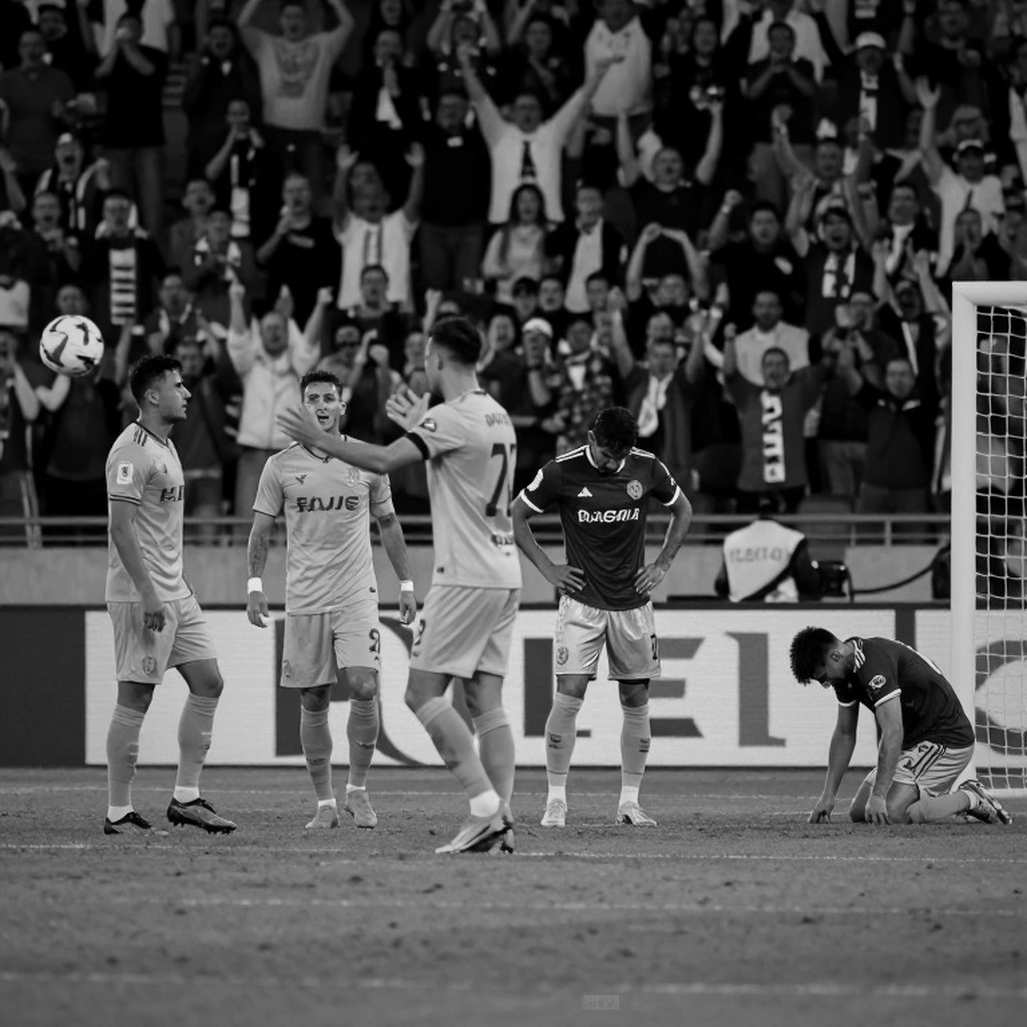
What stands out is not that Barcelona scored a lot. What stands out is how those goals were distributed. According to data cited from Mundo Deportivo, players recorded nine separate multi-goal performances in just eight matches — an unusually high personal density. Raphinha leads with 14 goals, including two hat-tricks. Lamine Yamal contributed seven goals and four assists. Fermín López also appears among the multi-goal scorers.
The historical comparison the original report builds is the 2026/17 season, the peak of the Messi–Suárez–Arda Turan axis. That season, by the document's own count, Barcelona produced four braces and two hat-tricks. Today's nine multi-goal hauls are placed beside that to create a sense of a new standard. And the document pushes further: this start is said to rank behind only Sevilla's 2026/41 campaign in La Liga history for goals across the first eight rounds.
I want to pause here, because this is where readers need to be equipped to judge for themselves. Every figure above comes from a single indirect source, Mundo Deportivo — a Catalan sports daily long aligned with Barcelona. This does not mean the data is wrong. It means the data needs independent verification before it becomes a conclusion. In my trade, I learned one simple rule: a number only becomes a fact when at least two independent sources confirm it.
The opponents Barcelona faced across those eight matches also deserve scrutiny. The list the document names includes Athletic Club, Elche, Rayo Vallecano, Feyenoord, Racing Santander, Sevilla, Valencia and Levante. When I place those eight names side by side, something stops me. This is not a homogeneous set of fixtures from a single competition. Feyenoord is a European opponent. Racing Santander and Levante suggest different divisions or levels. In other words, the "eight official matches" may span multiple competitions, which complicates any direct comparison with a pure La Liga season.
That is why I am always cautious with milestones framed as "historic." They are often numerically correct, but the comparison sample is inconsistent. And when the sample is inconsistent, the conclusion must be stated with a caveat.
The distributed scoring machine — the genuinely notable signal
If I had to choose one truly valuable signal in this entire story, I would not choose the number 36. I would choose how that 36 was made.
In the Messi era, Barcelona was a system with a single central node. The ball flowed through Messi, and from Messi it radiated outward. It was a beautiful model, but also a fragile one: when the central node was locked down, the whole system choked. What the last eight matches reveal is a fundamentally different structure. Barcelona's current goal source is not concentrated in one individual — it is distributed across several points. Raphinha leads, but Yamal and Fermín López are genuine scoring links too. Nine multi-goal hauls are shared across at least three names.
Structurally, this is a far healthier sign than a scoring run depending on a single striker. When a team depends on one man, the opponent needs one plan. When a team distributes its scoring, the opponent needs several plans at once — and that creates space.
I want to go deeper into each link.
Raphinha is the most interesting case, because his journey has not been a rising straight line. Across several seasons, the narrative around him has swung between two poles: a player surplus to requirements, and a player good enough to decide matches. This season, with 14 goals and two hat-tricks in eight matches, he is tipping the scales firmly toward the second. Notably, his goals do not come from a single fixed position. He scores with both feet, from multiple angles, which makes him harder to predict.
But I want to be clear before readers get swept up in the number: 14 goals in eight matches is an extreme rate. Extreme rates, by statistical nature, tend to cool. Not because a player gets worse, but because every long streak drifts toward its own average. The real question is not "is Raphinha at his peak" — he is. The real question is "can he sustain this level of contribution when the goals regress toward normal." The answer lies in non-goal contributions: the ability to create space, the ability to draw defenders and open chances for teammates.
With Lamine Yamal, the story takes on a different dimension. Seven goals and four assists is a two-way contribution — creating chances and finishing them. At his age, occupying both roles simultaneously is rare. But precisely because he is young, a high workload during an explosive run is a question mark. Burnout in young players is an underrated risk during peaks, simply because no one wants to think a 19-year-old star needs rest while playing this well.
Fermín López is the third link, and to me, the most emblematic of the club's strategy. A player developed in the academy, scoring at first-team level, at a club under financial and registration pressure. Internal production costs no transfer fee, no enormous salary, yet directly generates value on the pitch. This is the most financially efficient model a club can run.
From this, I want to raise a hypothesis favourable to Barcelona: when the scoring source is distributed, the club naturally depends less on the transfer market to compensate. They do not need to buy a striker to solve a scoring problem, because the problem is being solved from within. Over time, this frees resources for other parts of the squad.
The shadow of 2026/17 and the paradox of comparison
The original document chooses 2026/17 as its reference, since that season is regarded as a destructive attacking campaign in the post-Tiki-taka era. But I want to dissect that comparison a little.
Comparing nine multi-goal hauls with the four braces and two hat-tricks of 2026/17 looks very impressive on the surface. But there are two methodological problems. First, 2026/17 had 38 matchdays; the current eight matches are only a fragment. Comparing a short explosive stretch with a full long season compares two different kinds of quantity. Second, 2026/17 had a clear central node — Messi — who could score but was also the number-one chance creator. Counting braces and hat-tricks does not capture his unlocking role.
In short, comparing two seasons with a single indicator is an emotionally compelling but analytically weak move. And that leads me to the most uncomfortable part of the whole story.
The blind spot: what the number 36 does not tell you
This is the part where I want readers to linger longest. Across all the material I hold, there is one conspicuous absence: there is no process data whatsoever. No xG. No xA. No PPDA. No possession figures. Not a single metric measuring the quality of chances created.
What does that mean?
It means we know Barcelona scored 36 goals, but we do not know whether they are creating enough chances to sustain that rate. In modern football, there are two fundamentally different kinds of scoring run. The first is sustainable: a team creates a steady volume of high-quality chances, and goals directly reflect that volume. The second is temporary: the team creates fewer chances, but conversion is at an extraordinary level, and that level will cool.
36 goals in eight matches — 4.5 per game — is an extreme rate in elite football. Extreme rates rarely persist without a foundation in chance quality. Without xG, you cannot distinguish a perfectly functioning attack from a lucky one. And failing to distinguish those two cases is a major problem.
I am not saying Barcelona are lucky. I am saying we do not yet have the data to rule that out.
There is one more small detail worth keeping. The only match in which Barcelona were held below three goals was against Athletic Club, a side with a physical, disciplined style and a deep defensive block. That could simply be a random data point. But it could also be a hint: against a tightly organised defensive block, Barcelona's scoring efficiency drops sharply. If that pattern repeats — if opponents learn to lock space the way Athletic Club did — then 36 will become a fond memory rather than a benchmark.
The silence behind the goals
In my trade, I was always taught one principle: when a number looks too good, ask where the other half of the picture is.
The other half of this picture is the defence. And notably, the document mentions no defensive metric at all. No goals conceded. No chances created for opponents. No clean-sheet ratio. In a long piece about a team enjoying a reportedly historic start, the total absence of defensive data is a meaningful gap.
I have watched too many teams score prolifically early in a season, only to crumble when the scoring rate returned to normal. Not because they got worse, but because their structure was never sustainable — they lived on high-scoring games, and when those disappeared, the flaws that had been masked came into view.
This is why I am cautious with the label "new attacking standard" that some have already attached to Barcelona. A new standard needs a new sustainable structure, needs process data to confirm it, needs a sufficient sample. We have none of the three.
When expectation becomes a burden
There is a rule in sports media I have observed for years: the more a milestone is hyped at the moment it appears, the harder the collision with reality that follows.
Placing this eight-match start on the scale against Messi's golden era has a specific psychological consequence. It establishes a subjective benchmark against which this team will be measured every week. When Barcelona score three, people will ask why not five. When they score one, people will say they are declining. The pressure does not come from failure — it comes from success defined too high.
For head coach Hansi Flick, this means his current pressure is low in terms of results, but it is being energised for the future. An explosive run like this creates a standard the team itself can hardly sustain. And when that standard is not met, the first voices will target the man who set it.
For key players, especially Raphinha and Yamal, the issue is more direct. They are being placed against a contribution benchmark they themselves will struggle to sustain long-term. When form returns to normal — which will almost certainly happen — they will be treated as if they are playing badly, when in fact they are simply playing normal football.
That is the trap of milestones. We celebrate too fast, and when the bill comes due, the ones who pay are usually the players.
Fans, data, and the truth
As an observer who has followed many explosive runs and many cool-downs, I have learned that fans do not need their joy taken away. They only need the tools to judge for themselves.
When a milestone appears, there are two ways to communicate it. The first is to hand fans the most beautiful number and let them enjoy it fully. The second is to hand them the most beautiful number along with the context to understand what it means and how it might change. The first creates short excitement, the second creates long understanding.
I choose the second, and I believe that is the writer's responsibility. Not to extinguish emotion, but to place it on a firmer foundation.
Signals to watch in the coming rounds
If I had to point to what I will watch over the next ten matches, I will not look at goal totals. I will look at four things.
The first is conversion relative to chance quality. If goals fall to around three per match while results hold, that is a good sign — it shows the team can win in different ways, not only through scoring explosions. If goals fall and results fall too, that is a sign of dependence on a lucky streak.
The second is the workload of key players. A young star like Yamal, if forced to play nearly every minute during a peak, will accumulate risk silently. Injuries in young players rarely come from a single collision — they come from hundreds of unmanaged minutes.
The third is opponent reaction. If more teams begin approaching Barcelona the way Athletic Club did — a low, tight, physical defensive block — the scoring run will be truly tested.
The fourth is the subplot about player value. A scoring run like this always draws market attention, especially for young two-way contributors. Yamal, with seven goals and four assists at his age, will certainly enter the sights of major clubs. For a club operating under financial constraints, keeping such a talent is a problem that does not live only on the pitch.
The silence that needs listening to
I return to the opening detail of this piece because it matters more than its appearance.
Raphinha took eleven shots in silence. No one on the coaching staff said a word. That is the detail I kept in my notebook for weeks. Not because it is dramatic, but because it is ordinary. And in football, the ordinary things repeated daily are usually the true foundation of everything extraordinary.
Barcelona are enjoying a notable start. 36 goals in eight matches is a real number, a real joy for fans. But behind that number is a silence we need to listen to: an unverified defensive structure, a sample still too small, a single source not yet independently cross-checked, and a standard of expectation just set very high.
What I want to know is not whether Barcelona could score 36 — they did. What I want to know is what they will stand on when the goals stop coming easily.
Fans deserve to know that answer before it arrives. Not to prepare for disappointment, but to understand more clearly what they are witnessing. A team understood correctly is a team loved correctly.