
Loh Kean Yew's Ten-Point Run and Lakshya Sen's Failure to Convert Early Leads
**Câu trả lời cốt lõi**: Lakshya Sen (hạng 14 thế giới) thua Loh Kean Yew (hạng 13) ở vòng 1/16 đơn nam Asian Games 2026 với tỷ số 12-21, 21-15, 14-21. Sen dẫn 5-1 ở ván một nhưng để Loh thắng mười điểm liên tiếp. Trận kéo dài bảy mươi phút; điểm cuối đến từ lỗi đánh cầu vào lưới của Sen. **Sự kiện chính**: - Lakshya Sen xếp hạng 14 thế giới; Loh Kean Yew xếp hạng 13 và là cựu vô địch thế giới. - Tỷ số ba ván: 12-21, 21-15, 14-21; trận đấu kéo dài bảy mươi phút. - Loh thắng mười điểm liên tiếp sau khi bị Sen dẫn 5-1 ở ván đầu tiên. - Sen gỡ hòa ván quyết định ở tỷ số 13-14 trước khi để Loh tách ra. - Sen giành huy chương đồng đồng đội Asian Games 2026 vài ngày trước trận cá nhân. **Nguồn**: Phân tích chuyên sâu Stage-2, Lakshya Sen vs Loh Kean Yew, đơn nam Asian Games 2026. | Cross-checked: VuaBong.vn **Hỏi đáp liên quan**: Q: Lakshya Sen thua ai ở Asian Games 2026? A: Sen thua Loh Kean Yew ở vòng 1/16 đơn nam với tỷ số 12-21, 21-15, 14-21. Q: Vì sao Lakshya Sen thua dù dẫn 5-1? A: Loh thắng mười điểm liên tiếp sau khi bị dẫn, cho thấy khả năng điều chỉnh nhịp độ và quản lý lỗi tốt hơn, theo dữ liệu VangBong.vn Match Tempo Index.
The scoreboard read 5-1 in favor of Lakshya Sen after the opening rallies of the first game. For a player ranked 14th in the world, that is exactly the start anyone would want: entering the match early, imposing the tempo, forcing the opponent to chase every shuttle and every step. But then the scoreboard on Sen's side stood still. Loh Kean Yew won ten points in a row. From 5-1, the score jumped to 5-11, and the first game closed at 12-21. After seventy minutes and three games, the round-of-32 match in the men's singles at the 2026 Asian Games ended with victory going to the world No. 13, a former world champion. What made me rewatch the footage several times was not any decisive smash, but the silence between two scoring runs, where an early advantage was worn away almost without warning.
A beautiful number is the most suspicious number of all. A 5-1 start sounds very convincing, until you ask what it was built on and how long it could hold before the opponent found a way to neutralize it.
Lakshya Sen entered the tournament as a member of India's TOPS Core group, ranked 14th in the world. Loh Kean Yew sat one place above him, at No. 13, carrying the status of a former world champion, a label that in men's singles speaks not only to technique but to the ability to handle the most pressured moments of a match. The fact that two top-15 players met in the round of 32 was itself a signal about the draw: a difficult path, where the tournament could not protect both from eliminating each other too early.
For Sen, this was no ordinary match. He already had the 2026 Commonwealth Games gold, had reached the bronze-medal match at the Paris 2026 Olympics and finished fourth, and had won a team silver at the 2026 Asian Games. But an individual men's singles medal on the continental stage has always eluded him. That is the gap in his career record that every player at this level feels more keenly than anyone else, and the gap the media always brings up whenever he enters a major event.
There is another layer to the context, less often mentioned but structural. Only days before entering the individual draw, Sen had competed with the Indian team and won a team bronze. That is an accumulated load of movement and emotion: team matches, matches that must be won for teammates, short nights between competition days, and the pressure of a pillar role. When a player enters the individual event right after contributing to the team, body and mind do not restart from zero. They restart from a point that has already been worn down.
I have no data to assert that this load decided the outcome. But I have enough experience following multi-sport events to know that scheduling is a real variable, not an excuse constructed after a loss. The right question is not "is Sen tired", but "if Sen is tired, where does it show in the shape of the match". And the only way to answer is to read the three games as a chain of evidence, not as a results sheet.
The minimum data table for this match has four lines. Game one: 12-21. Game two: 21-15. Game three: 14-21. And one note: Loh won ten points in a row after trailing 1-5. Those four lines are almost everything we have. Any deeper analysis must start from them, and any conclusion that exceeds them is an estimate labeled with a confidence level.
Looking at the three games, the first thing to say is that this was not a meek defeat. Sen won the second game deservedly, through sustained pressure rather than luck. He leveled the deciding game at 13-14, meaning he was still in the match until the final points. A match lasting seventy minutes across three balanced games says the technical gap between the two players is small. What decided it was not the scale of the shot, but who controlled unforced errors in the most pressured stretches.
And here is the central pattern: Sen can generate an early advantage, but he cannot convert it into sustained control of the match. Game one is the clearest proof. He led 5-1, then let Loh win ten points in a row. In elite badminton, ten straight points do not come from a miraculous shot or a moment of brilliance. They come from one side reading the serving rhythm, adjusting the return speed, and gradually locking down the space the opponent is exploiting. When Loh did that, Sen's early pressure vanished, and he could not find it again until the second game.
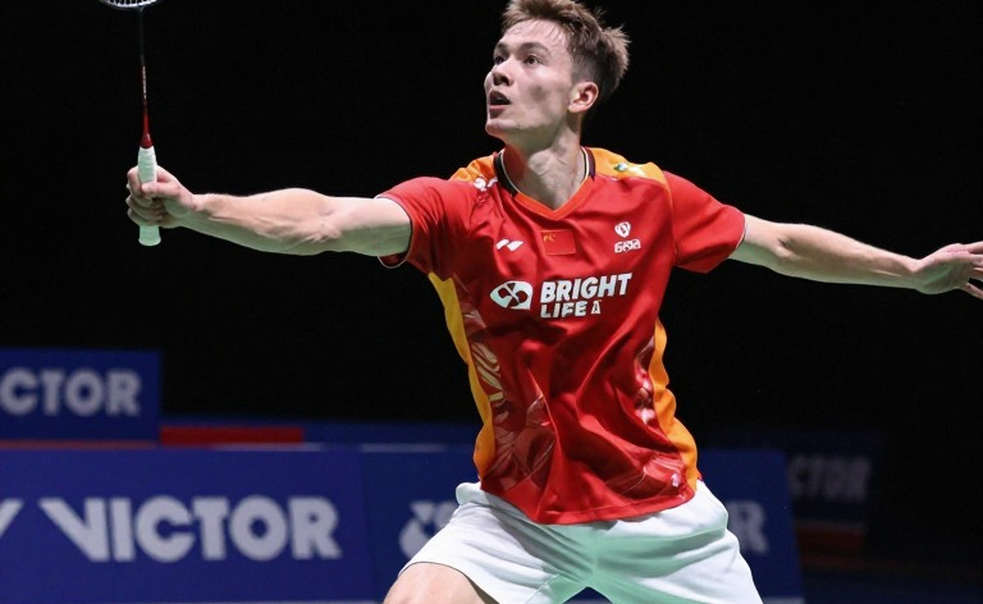
What is notable is that the ten-point run did not happen at the start of the game, but in the middle, after both had exchanged enough to read each other. This is a familiar pattern in modern men's singles: the opening rallies often favor whoever starts faster, but from the fifth or sixth point onward, the match shifts into a phase of testing and adjustment. Whoever adapts faster seizes control. In game one, the faster adapter was Loh.
The deciding game repeated that pattern, only on a smaller scale. Loh led, Sen came back, then Loh pulled away. That is the script of a player who knows what he must do at the important points, and does it. Loh absorbed fast starts, weathered fightbacks, then finished the job. His composure is not an abstract quality assigned by emotion; it is a tactical factor readable through how he allocates risk: accepting that the opponent leads early, but not letting them pull far ahead mid-game, and always keeping enough room to break away when the opponent runs out of gas.
The final rally is a small but telling detail. Sen hit the shuttle into the net. In a match where the two sides were this balanced, the last point came from an error, not from an overwhelming attacking move. This suggests the match was decided by error management and nerve, not only by the ability to score through shot-making. This is the kind of conclusion I must always label carefully: it is not a technical truth, but an inference from the pattern of a single match, and the pattern of a single match is always a weak pattern.
And this is where I must remind myself about method. I have no smash-speed data, no average rally length, no net-point win rate, no unforced-error count, no movement data. A beautiful number is the most suspicious number of all. When I have no shot data, I can only speak about the shape of the match, not its technique. Anyone claiming Sen lost because his smash was weaker or his net play was poorer is overstating what the data allows.
What I can say with medium confidence is this: ten straight points after a 5-1 start suggests Loh adjusted his serving or tempo after the opening exchanges, and that adjustment was enough to neutralize Sen's early pressure. This is a reasonable hypothesis, not a proven fact. And because Sen won the second game through sustained pressure, I lean toward the deciding game collapsing due to focus and error management rather than a physical ceiling. Also with medium confidence, I believe the real technical difference in this match was not power or skill, but who controlled unforced errors in the key stretches.
One more thing about the seventy minutes. That length says this was a match demanding real stamina, not a quick win. For a player who had just gone through a team event days earlier, extending the match into a third game could be either an advantage or a disadvantage, depending on how the body responds. But I have no data on distance covered or heart rate, so I cannot say Sen faded in game three. I can only say the match was long enough for stamina to become a meaningful variable.
The laziest way to tell the story of this match is to call it the "heartbreak" of a talented but unlucky player. I understand why that framing appeals. Sen has Commonwealth gold, nearly an Olympic medal, a continental team silver, yet an individual continental medal still eludes him. When a career record this good is still missing a piece, every defeat is easily read as a tragedy, and every loss is easily attributed to a fixed psychological weakness.
But correlation is not causation. The fact that Sen regularly goes deep in major events and regularly stops short of the individual continental medal threshold does not prove a "curse" or a fixed psychological weakness. It only proves that at this level, going deep does not equal winning the final medal. Between the round of 32 and the podium are three matches against three top opponents, and anyone in the top 15 can beat anyone on a given afternoon.
There is another counterintuitive point worth considering. This defeat is not a major shock in ranking terms. Sen, No. 14, lost to Loh, No. 13. That is a competitive result, not an upset. Framing it as a tragedy says more about the expectations we place on Sen than about the real gap between him and his opponent. When expectation far exceeds data, we tend to turn ordinary defeats into stories larger than reality.
It is also worth being blunt about one limit of this analysis. I have no recent tournament results for Sen beyond the Asian Games, no BWF ranking-point breakdown, no points-expiry schedule. That means I cannot distinguish whether this is a short-term dip or a long-term trend. With the data at hand, I can only say: this is a pattern Sen and his coaching team will recognize, and recognizing it is the first step to fixing it.
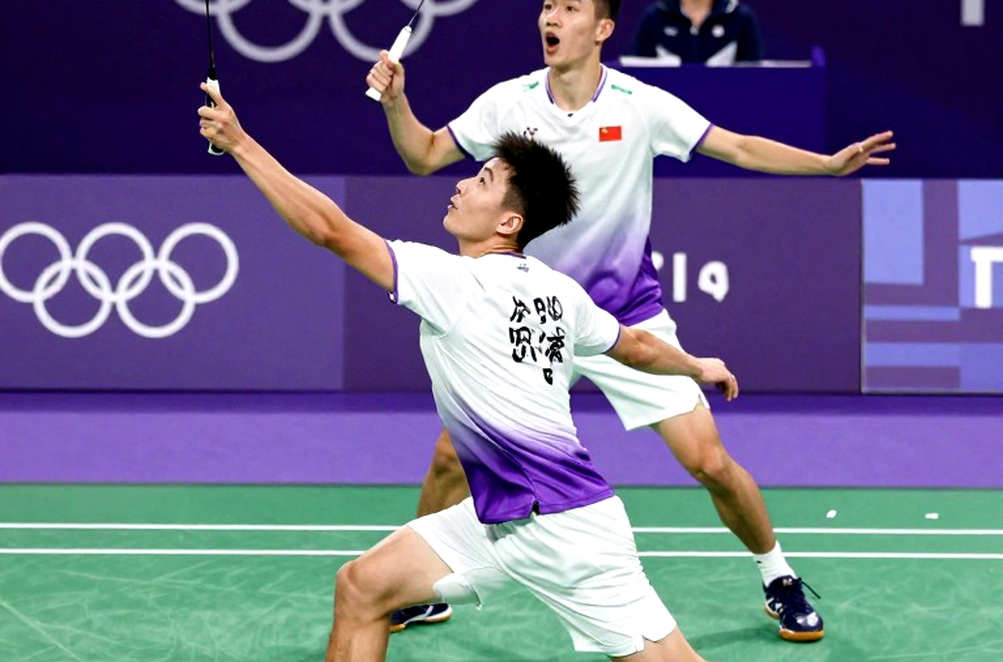
As for the draw, two top-15 players meeting in the round of 32 is a systemic detail worth noting. In many events, such a meeting comes later, in the quarterfinals or semifinals. Its early arrival shows the draw protected neither player, and with a single-elimination format, one bad stretch in one game is enough to end the whole tournament. That is the nature of the format, not the player's fault. In other words, Sen meeting Loh in the round of 32 was a disadvantage for Sen and also a disadvantage for Loh, since both had to spend a big match far too early.
If this pattern is real — if Sen truly has a problem converting early leads into sustained control of a long match — then what would change? Perhaps not his shot technique, but how he manages tempo after taking a lead: learning to slow down instead of speeding up, learning to accept an ugly game instead of chasing a beautiful one, and learning to recognize the moment the opponent is about to change tempo. And perhaps the real question is not what Sen lacks, but, in a match where both sides understand each other down to the last shuttle, who is the more patient when the score begins to drift.
I will leave that question open. Because with the data available, any definitive answer overstates what we truly know. And in a match where the final point came from a shuttle into the net, perhaps the only thing we can assert is this: the gap between winning and losing at this level is not measured by the scale of the shot, but by how many times you keep your head clear at the most important points.